Adding a test station to a winding line does not by itself protect the output. The protection comes from what happens in the seconds after a test fails: the part must be identified, physically separated, labelled with a reason, and counted in a way that feeds back into the process. Where any of those links is weak, a rejected coil can rejoin the good flow, a good coil can be scrapped by mistake, or the same fault can repeat for a whole shift without anyone seeing the pattern.
This article describes the four links of a reject route as an engineering interface, not as a software product. It avoids naming any particular protocol or data structure, because the same questions apply whether the line uses a simple signal and a bin or a full traceability system.
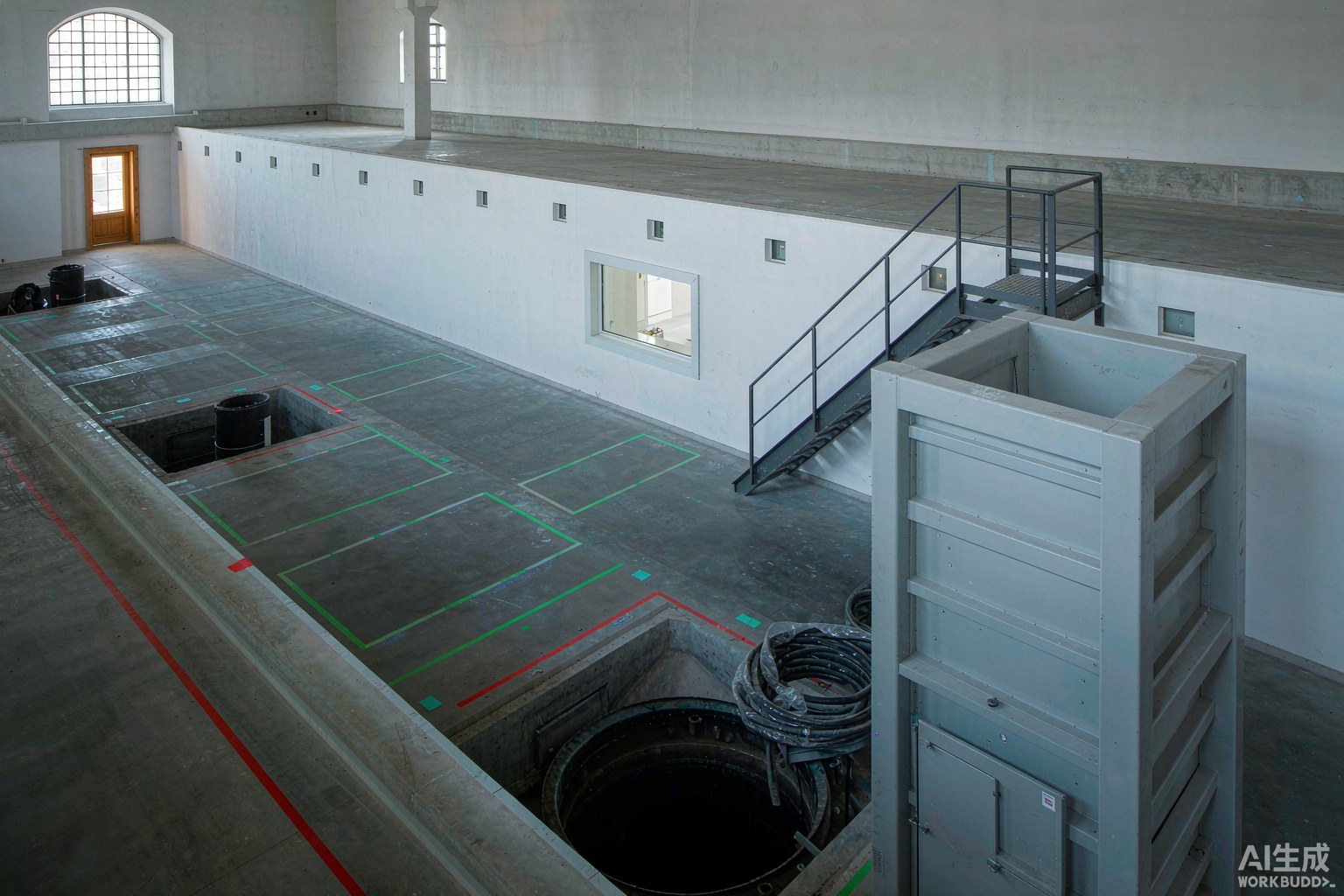
Fig. 1 - Elevated view along a production line showing stations and transfer paths. Illustrative image, AI-generated. Not a product photograph or a measurement record.
1. Flag the Result Before the Part Leaves the Test Point
The first requirement is that a result belongs to a specific part. A station that detects a fault but only raises a general alarm leaves the line with no way to know which carrier, pallet or coil to remove. The link between part identity and result must be made at the moment of measurement, before the part moves on. Where parts are not individually identified, a positional link - the part at station N at time T - is the minimum, and its limitations should be written down.
Timing is part of the specification. If a result arrives after the part has already transferred, the line needs a defined buffer or a hold point, not an assumption that the downstream station will figure it out. Ask what happens on a communication delay, on a station restart and on a manual intervention; those are the moments when an otherwise sound design silently loses the link.
2. Give Rejects a Physical Path That Cannot Rejoin
Segregation has to be physical and unambiguous. A marked area on a screen is not a reject bin. The route should place the failed part in a location from which it cannot be picked up as a good part, with a clear rule for who may remove it and what happens next. Where several failure types exist, separate containers prevent a mixed box that later has to be re-sorted by hand, which is both slow and a common source of new errors.
The route also needs to handle the awkward cases: a part that tests good on a retest, a part whose identity is uncertain, a jam at the reject gate and a full bin. Define each as a hold state with a human decision rather than a default that pushes the part back into production. A reject path that fails open is worse than no automated test at all.
3. Attach a Reason, Not Just a Flag
A reject count tells you that something happened; a failure code tells you where to look. The record should include the code, the part identity, the program version, the station, the time and the action taken. With those fields, a rising count can be tested against a specific spindle, a wire batch or a recent setting change. Without them, the response to a bad shift is usually a broad adjustment that may fix nothing and disturb parts that were fine.
Keep the code set short and stable. An elaborate taxonomy that operators interpret differently is less useful than a handful of well-defined categories plus a free-text note. The goal is a pattern that an engineer can act on, not a database that impresses an auditor.
| Link | What must be true | Failure mode if missing |
|---|---|---|
| Flag at station | Result bound to a part before transfer | Wrong or unknown part removed |
| Physical segregation | Reject path cannot rejoin good flow | Failed part reaches assembly |
| Reason code | Code, version, station and time recorded | No pattern visible across a shift |
| Review loop | Data leads to a controlled change record | Same fault repeats indefinitely |
| Exception handling | Retest, jam and full bin have hold states | Manual workarounds go unrecorded |
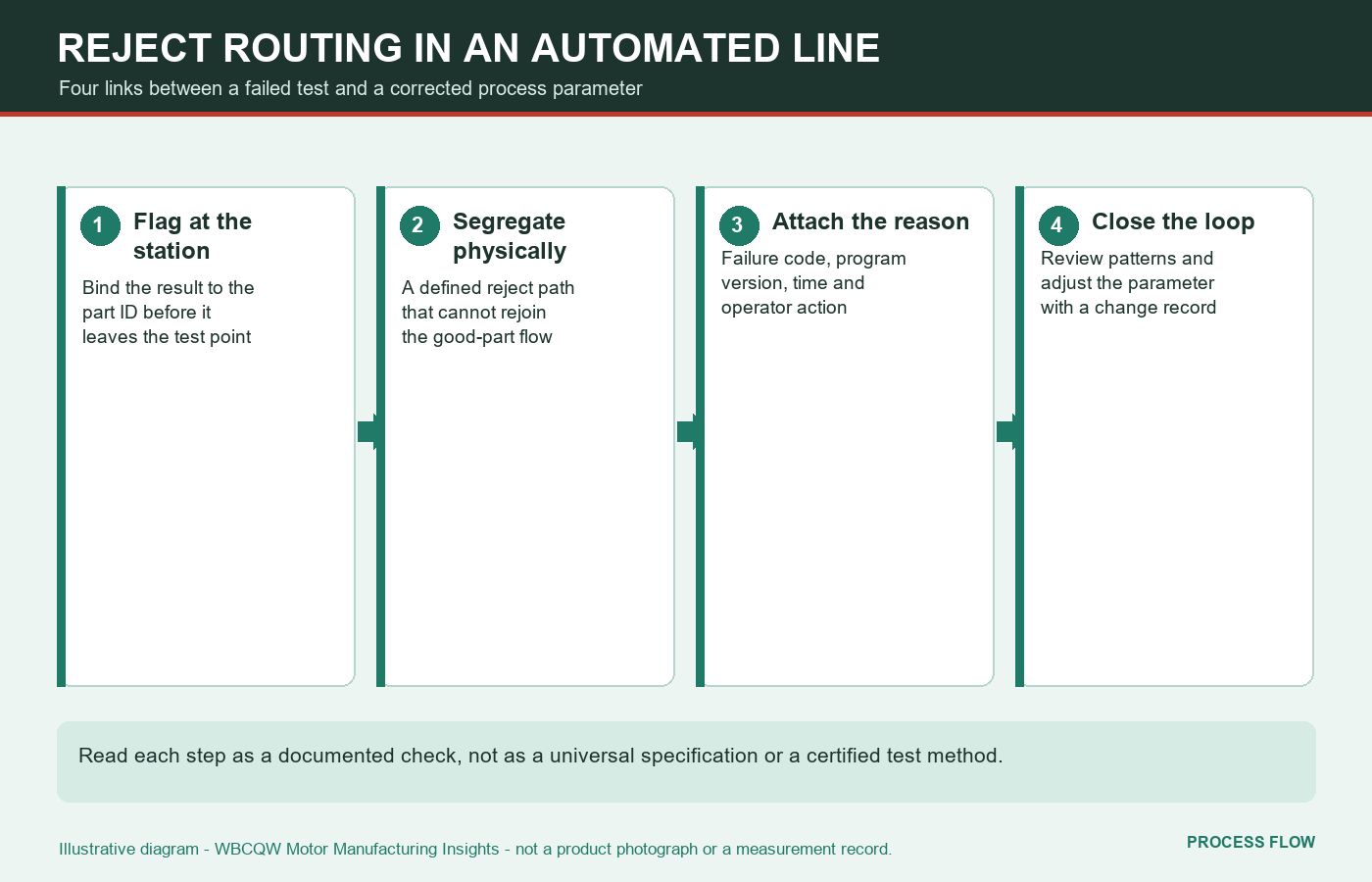
Fig. 2 - Flag, segregate, attach a reason and close the review loop. Illustrative diagram, not a product photograph or a verified test result.
4. Close the Loop Back to the Process Parameter
Reject data earns its cost when it changes something. A simple review at a defined interval - by shift, by batch or by a count threshold - should compare failure codes against program versions, machines and material batches, and decide whether a parameter change is justified. That decision belongs in a change record with the reason, the approver and the first-article result afterwards. An automatic adjustment made by the line without a record is difficult to audit and difficult to reverse.
Equally important is knowing when not to adjust. A cluster of termination faults may point to a lead wire batch rather than a winding parameter, and a rise in dimensional variation may point to wear parts. The review should be allowed to conclude that the winder is not the cause. Otherwise the loop becomes a machine that slowly detunes itself in response to every symptom.
5. Where Integration Usually Breaks
Most problems appear at boundaries: between the test instrument and the line controller, between the line and the site data system, and between automated decisions and manual recovery. A restart after a fault is a classic case - the part identity is re-established, the old result is still in a queue, and a good part inherits a reject flag. Another is a retest rule that operators apply informally, which leaves the count inconsistent with the physical bin.
Test these cases deliberately during commissioning. Create a fault, watch the part travel, empty the bin, restart a station mid-cycle and verify that the count, the physical parts and the records still agree. A route that works only in steady-state production is not yet an interface specification.
6. Limits and a Commissioning Checklist
A reject route does not improve the winding process on its own. It makes the process legible, so that problems can be found and fixed. It also cannot compensate for a test that does not predict the failure that matters in the finished assembly. Those two boundaries are worth stating plainly, because a clean dashboard can otherwise create more confidence than the underlying measurement deserves.
Before accepting the line, verify the route end to end.
Confirm a result is bound to a part before that part transfers.
Confirm the reject path is physical and cannot rejoin good flow.
Define hold states for retest, uncertain identity, jam and full bin.
Record failure code, program version, station and time with each reject.
Require a documented change record before any parameter adjustment.
Test the route across station restarts and manual recovery.
The value of automation here is not speed. It is that a bad part leaves the flow with a reason attached, and that the reason eventually reaches somebody who can change the process.