Serviceability is rarely visible in a specification sheet. Cycle time, axis count and wire range are easy to compare; the effort needed to replace a worn guide on a Tuesday afternoon is not. Yet that effort determines how often routine maintenance is actually done, how long an unplanned stop lasts, and whether small problems are fixed early or worked around until they become bigger ones. Access is therefore a design property with a direct effect on process stability.
This article offers a way to assess it during a demonstration or factory visit. It assumes no particular machine architecture and quotes no service intervals, because the right interval depends on the parts and the duty cycle. The point is to observe how the machine invites, or discourages, competent maintenance.
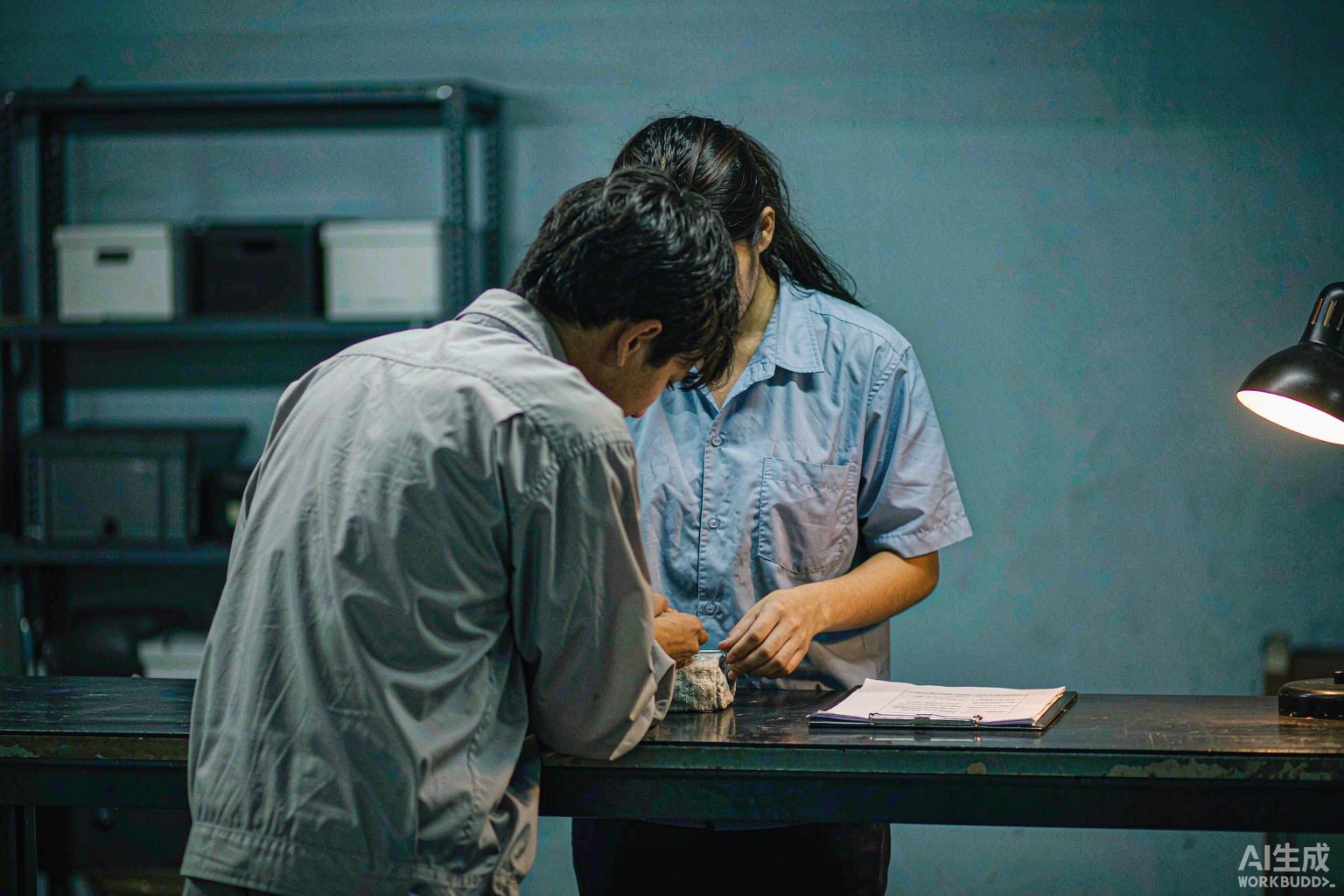
Fig. 1 - An engineer inspecting equipment at the point of operation. Illustrative image, AI-generated. Not a product photograph or a measurement record.
1. Start From the Parts That Wear
Before looking at the whole machine, list the items that will be replaced repeatedly: guides, nozzles, tensioner elements, clamp jaws, cutters and any belts or filters. For each one, ask where it sits, what has to be removed to reach it, and what has to be re-checked after the change. This converts a vague question about maintainability into a set of short, answerable questions about specific parts.
The answer often differs between the machine's demo configuration and the configuration you will actually buy. A guarding package, an enclosure or an added module can change access considerably. Ask to see the exact build that will be delivered, and treat a drawing of the base frame as only a starting point.
2. Guarding, Front Access and Tool Space
Fixed guards protect people, but a guard that must be removed for every routine consumable change will eventually be left off or replaced slowly. Look for access from the operator side, with the door open and the working position shown, rather than a description in a manual. Note whether the tension head can be reached without disturbing adjacent stations and whether a standard tool fits around it with room to apply torque.
Also watch the sequence. A change that requires disconnecting a sensor, removing a cover and re-homing an axis has more opportunities for error than a simple front replacement. Where a long sequence is unavoidable, a clear illustration at the machine and a fixed check afterwards are worth asking for. Neither is a substitute for access, but both reduce the variation between operators.
3. Identification and the Spare Parts Question
A wear part that cannot be identified from the machine becomes a small research project every time it fails. Look for part numbers on or near the consumables, or a labelled diagram inside the cabinet. Ask for the recommended spares list mapped to those labels, and note which items are standard catalogued parts and which are specific to this machine. That distinction has more influence on downtime than most buyers expect.
Ask how a changed part is verified. Replacing a guide or a tensioner element can alter the behaviour of the process, so a first-article or tension check may be needed afterwards. A machine designed with service in mind makes that check straightforward and provides a place to record it, rather than assuming the part is equivalent and production can simply resume.
| Observation | What to look for | What it reveals |
|---|---|---|
| Guarding | Consumables reached without dismantling fixed guards | Whether routine work will actually be done |
| Front access | Guides and nozzles changed from the operator side | Typical duration of a simple stop |
| Identification | Part numbers visible on or near wear items | Speed of ordering and correct replacement |
| Tool space | Room for a torque tool around the tension head | Risk of improvised methods and damage |
| Lubrication | Service points visible and reachable | Whether a routine round is practical |
| Documentation | Stated interval and a record template | Whether upkeep can be managed, not just performed |
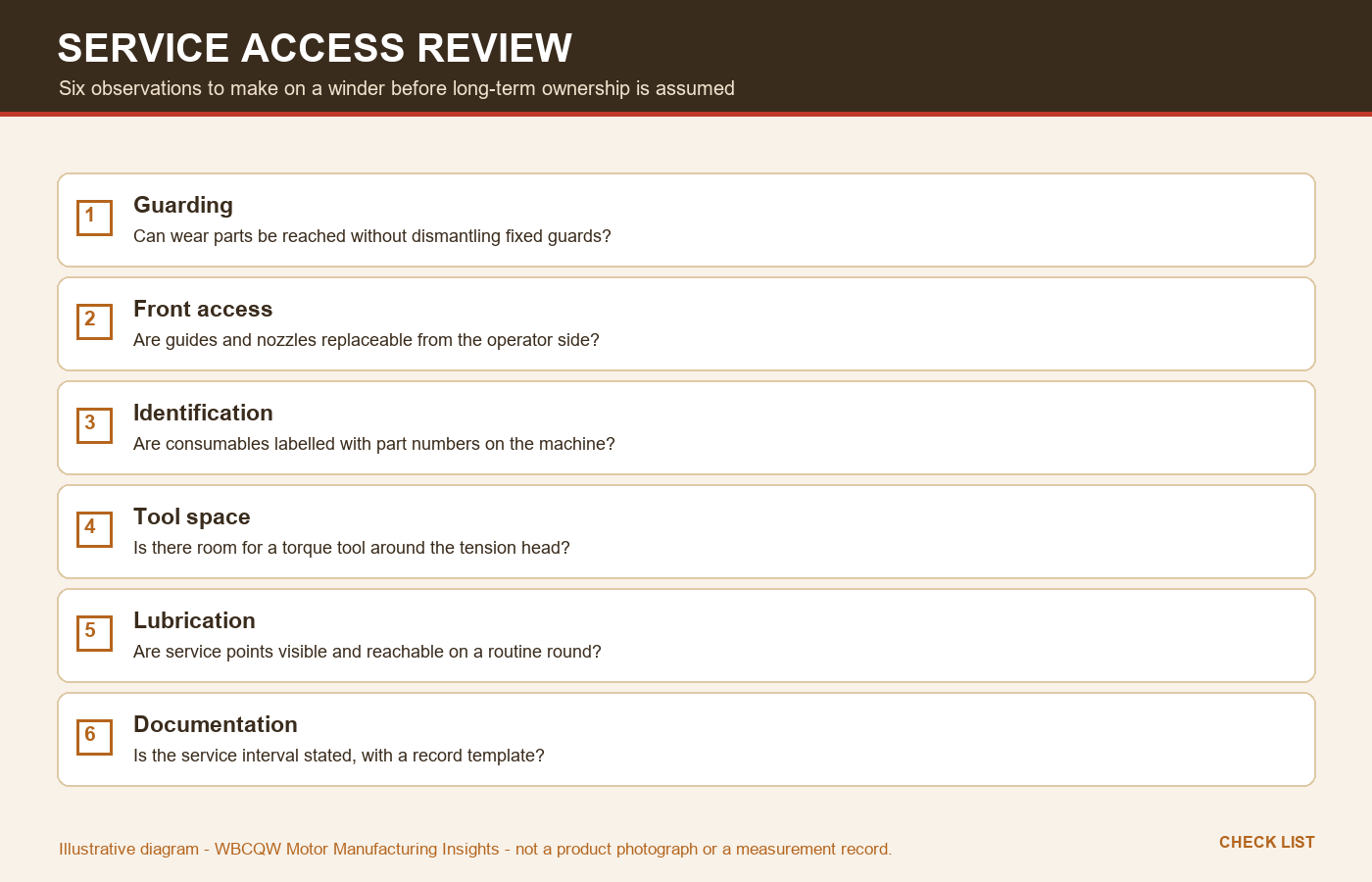
Fig. 2 - Six observations to make before long-term ownership of a winder is assumed. Illustrative diagram, not a product photograph or a verified test result.
4. Lubrication, Cleaning and the Routine Round
Some maintenance is not a replacement but a round: checking lubrication points, clearing wire debris, inspecting filters and looking for early wear. These tasks only happen if they can be done quickly and without dismantling anything. Observe where debris collects, whether it can be removed without touching the winding area, and whether the points that need attention are visible with the guards closed or only after a strip-down.
A useful question is what an operator can legitimately do during a short stop, and what requires a scheduled shutdown. If the answer is unclear, the routine round will be informal and inconsistently recorded. A simple checklist mounted at the machine, aligned to the actual access points, is often more valuable than a thick manual kept in an office.
5. Read the Service Record as Part of the Specification
Ask what the supplier expects to be recorded: the interval, the parts replaced, the checks after replacement and the person responsible. Then ask to see a blank record, not a completed showcase example. A blank template shows whether the process is designed to be followed. If there is no template, the buyer will have to build one, which is fine but should be a conscious decision rather than an accidental gap.
Supplier-stated service intervals and access claims should be treated as statements to be confirmed on the delivered machine, not as independently verified results. Include the observations from this visit in the acceptance dossier, so that a discrepancy between the demonstration build and the delivered build is visible at commissioning rather than months later.
6. Limits and a Visit Checklist
Good access cannot compensate for a process that consumes wear parts unusually quickly, and a well-documented service routine cannot fix a design that places a consumable behind a fixed guard. Access, consumption rate and documentation are three separate things, and a fair comparison records all three. It is also worth remembering that a demonstration machine is usually clean, empty and stationary; asking to see a used machine is more informative if the opportunity exists.
Carry this short list to the visit.
List the consumables and locate each one on the delivered configuration.
Open the guard and watch a guide or nozzle change from the operator side.
Check that part numbers are visible and the spares list matches them.
Confirm tool clearance around the tension head and clamp area.
Walk the cleaning and lubrication round without dismantling covers.
Ask for the blank service record and the check required after a part change.
Serviceability is not a feature that appears in a photograph. It is the accumulated result of small layout decisions, and a few direct observations at the machine will tell you more about owning it than a page of specifications.