Stator winding consistency determines copper loss, torque ripple, insulation reliability and, ultimately, how many units a line can ship without rework. When shortlisting equipment for EV stator production, the real question is not maximum speed but whether accuracy holds across thousands of parts, shift after shift.
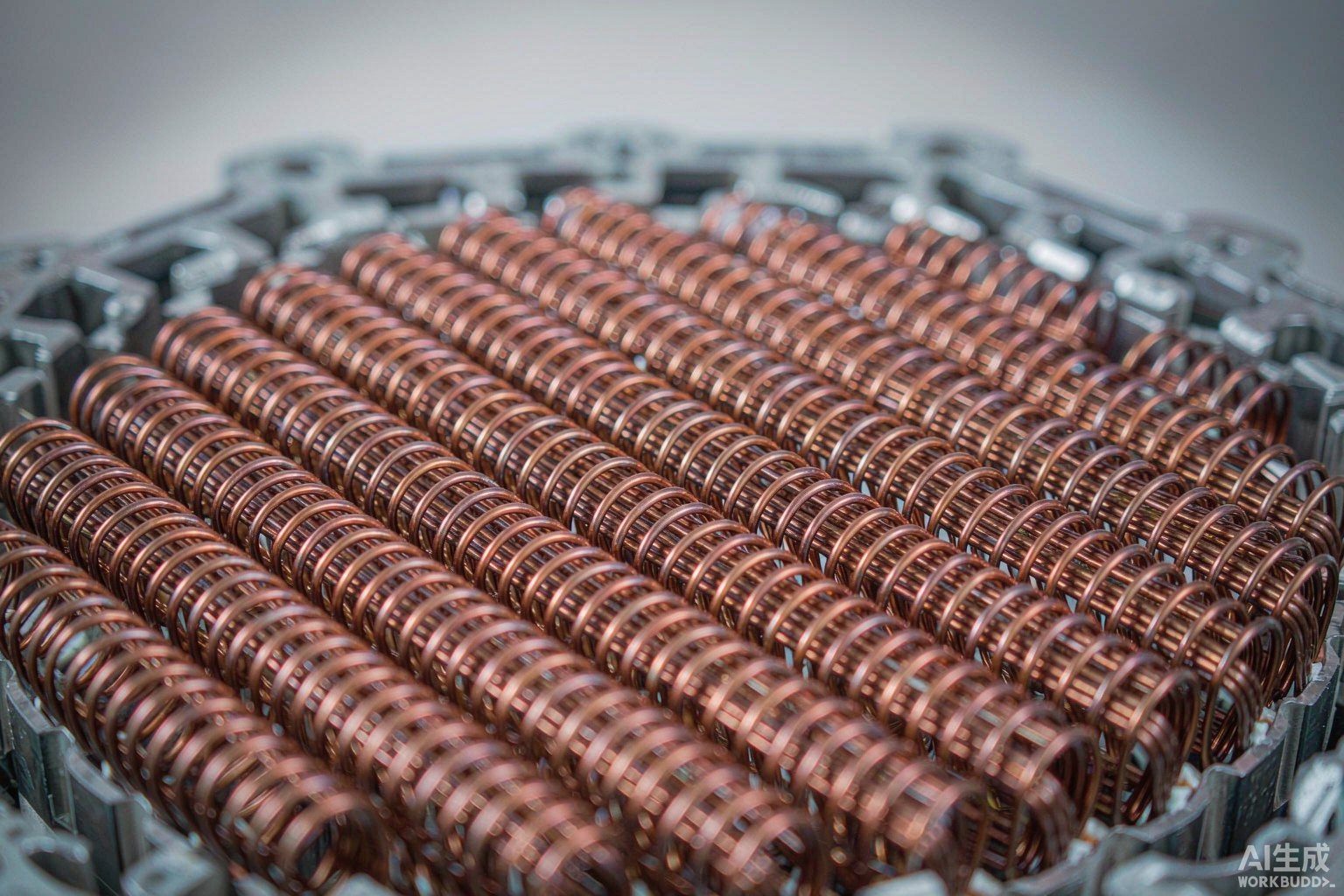
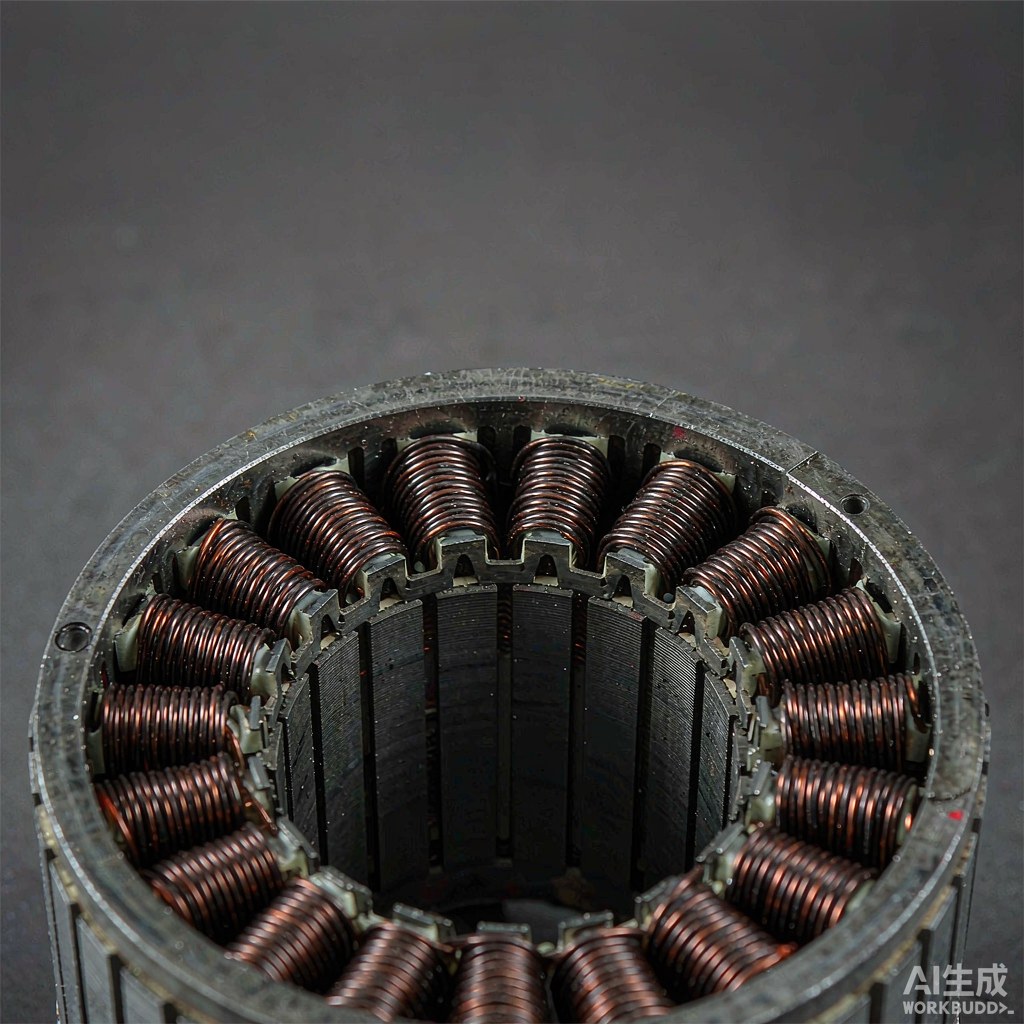
Fig. 1 EV stator copper windings - illustrative image, not a product photograph.
Datasheets rarely answer it. Most list winding speed and wire diameter range, but say little about tension stability, turn placement or drift after a full shift. This guide covers which specifications matter, how to verify them with your own materials, and what belongs in the acceptance test.
Why Winding Accuracy Matters in EV Stator Production
EV traction motors run at high current density and rotational speed, so small winding variations become measurable performance gaps. Uneven turn placement changes slot fill and wire length per phase; inconsistent tension stretches fine enameled wire and shifts DC resistance; a poorly seated wire may fail a hipot or surge test. At motor level these appear as phase imbalance, torque ripple and extra NVH, all costly to diagnose after assembly.
The production consequence is yield. A machine that makes a good first article but drifts after warm-up forces operators to retune tension and re-inspect every batch — costing an OEM line more than a slower machine with a stable process window. Accuracy should be judged as sustained capability, not a single demonstration.
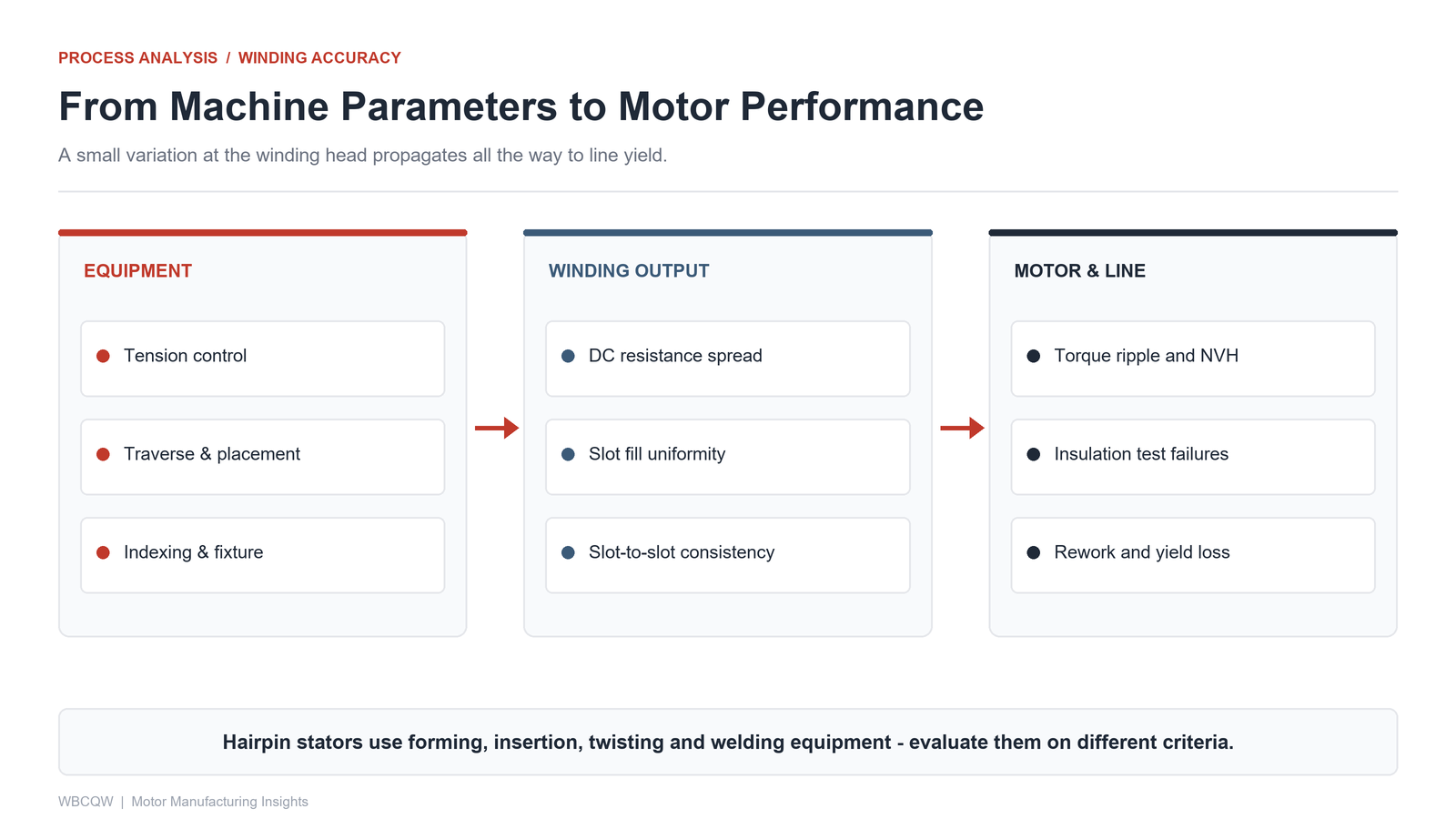
Fig. 2 How equipment-level variation propagates to motor performance and line yield.
Key Accuracy Specifications to Read, and How to Verify Them
A useful review separates positioning capability from wire-handling capability, then checks whether both hold at the target cycle time.
Tension control. Confirm closed-loop electronic tensioners versus open-loop damping, and the guaranteed deviation across the wire diameter range. Request a recorded tension trace, not a nominal value. Ultra-fine enameled and rectangular wire behave very differently.
Wire placement and traversing. Turn-to-turn spacing, layer alignment and traverse repeatability set slot fill uniformity. Ask for traverse resolution and measured placement error at production speed.
Indexing and fixture repeatability. Stator indexing, clamping and tooling datums set the reference for every slot. A precise tensioner cannot compensate for a fixture that shifts between slots.
Accuracy at speed. Vendors often quote precision at reduced speed. Insist on data at your intended cycle time, including acceleration and deceleration.
Auxiliary consistency. Cutting, hook-up, tail management and unloading are frequent sources of variation and deserve the same scrutiny as the winding motion.
Ask for evidence rather than claims:
| Specification | What it affects | Evidence to request |
|---|---|---|
| Tension deviation and control type | DC resistance spread, wire breakage | Recorded tension trace across the wire range |
| Traverse resolution and placement error | Slot fill uniformity, layer crossing | Measured data at target cycle time |
| Indexing and fixture repeatability | Slot-to-slot consistency | Repeatability report plus fixture drawing |
| Continuous-run drift and changeover | Yield over a shift, mixed-order capacity | Start / middle / end set, timed changeover |
From Spec Sheet to Sample Test: A Repeatable Acceptance Method
The most reliable evaluation uses your own stator core and wire, not the supplier's demonstration material. A structured sample test covers four stages.
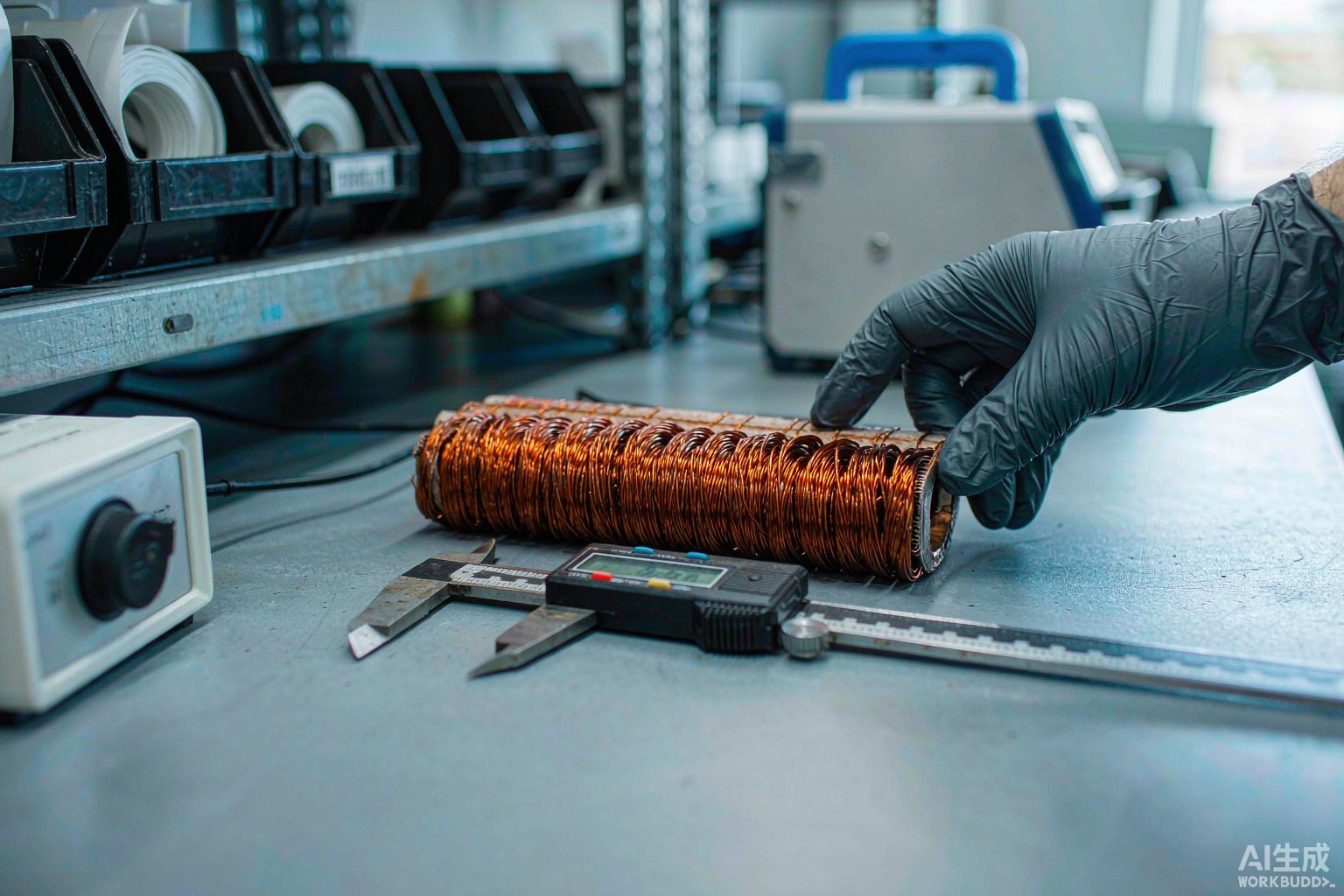
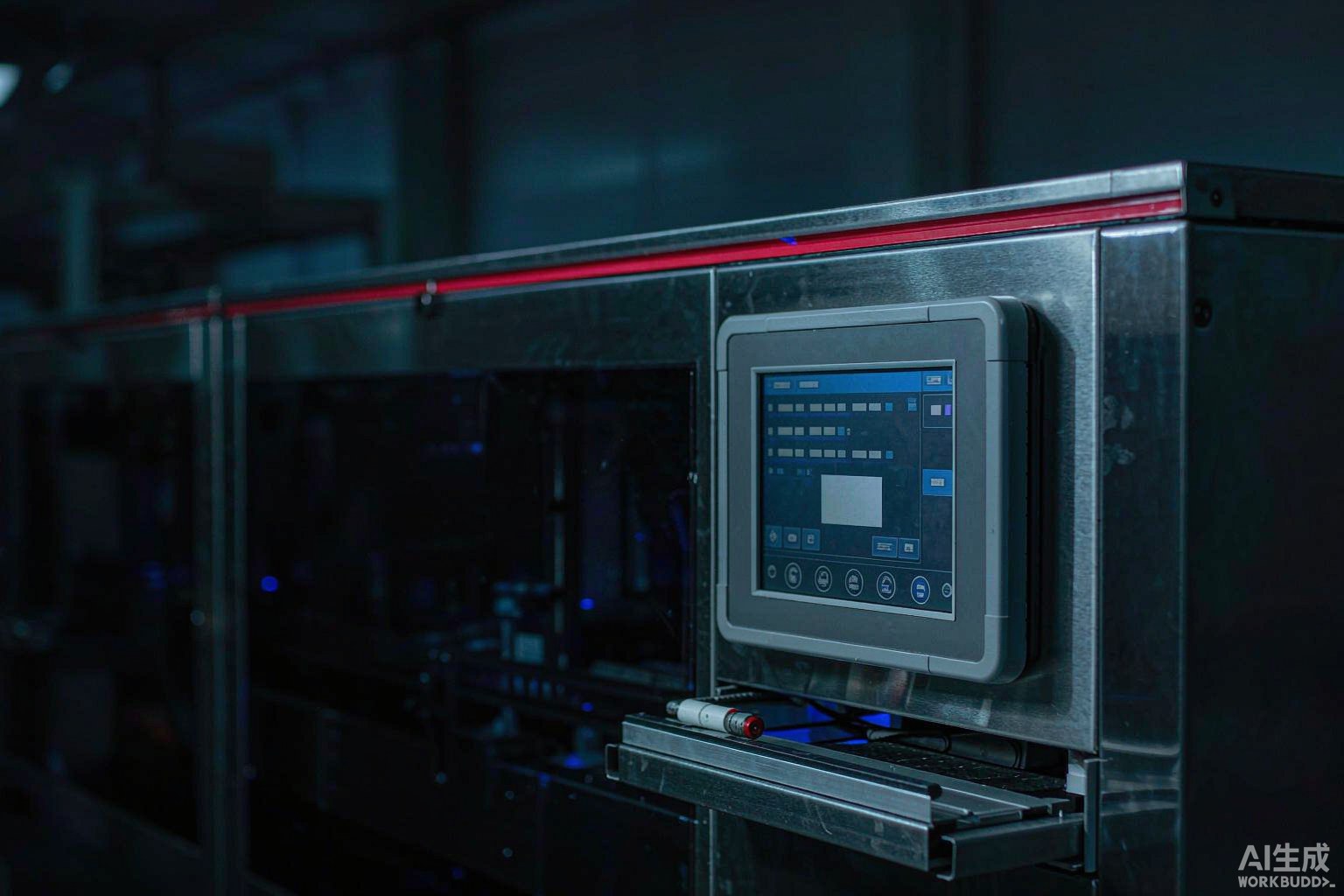
Fig. 3 Coil sample measurement during a winding trial - illustrative image, not a product photograph.
Define measurable outputs before the trial: turns, DC resistance per phase with tolerance, slot fill, insulation withstand, turn-to-turn surge, and visual criteria for wire crossing or enamel damage. Agree instruments and methods in advance.
Run a short first-article batch, then a continuous run long enough to expose thermal drift, commonly a full shift or several thousand parts. Record the same outputs at the start, middle and end, and compare the spread rather than the average.
Test changeover. Load a second stator variant and time reprogramming, fixture adjustment and first-piece approval. Mixed-order factories lose more capacity here than in the winding cycle.
Review process capability. A simple Cpk calculation on critical dimensions and resistance values shows whether the machine holds tolerance in volume, and gives both sides an objective acceptance criterion.
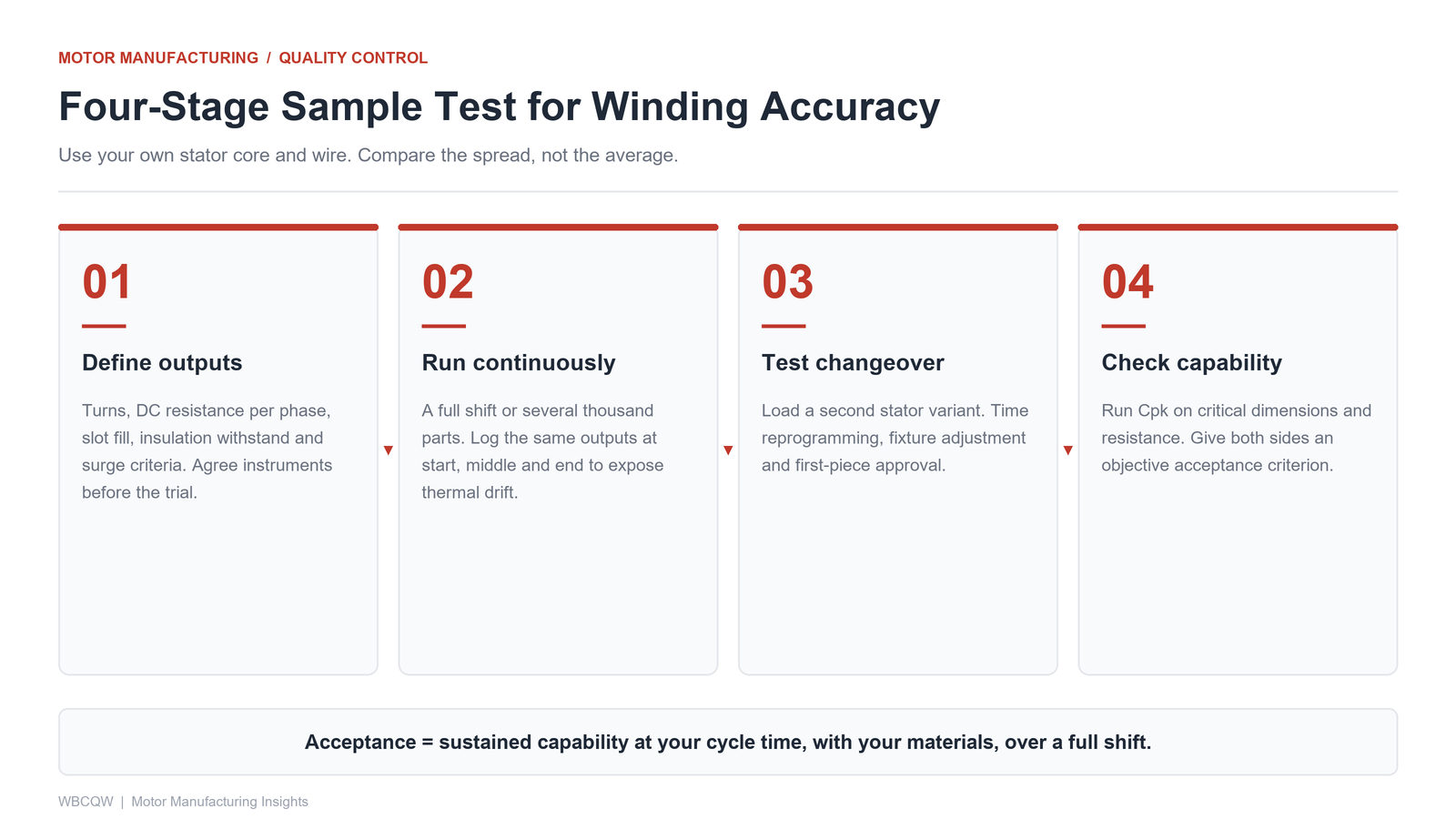
Fig. 4 Four-stage sample test used to verify winding accuracy before acceptance.
Limitations Buyers Should Plan For
No winding platform covers every EV stator design. Round-wire distributed windings, concentrated windings and hairpin stators require different processes. A hairpin line is built around forming, insertion, twisting and welding equipment rather than a conventional winding head, and needs a completely different set of criteria.
High-accuracy machines also demand stable workshop conditions: temperature, clean dry compressed air, reliable power and a solid foundation all influence tension and positioning. Expect a trade-off between accuracy, speed and investment — finer tension control and higher traverse resolution usually mean a longer cycle and higher cost. Nominal datasheet figures come from controlled conditions; treating them as guaranteed production values is an avoidable sourcing mistake.
Supplier Capability Checklist
Beyond the machine, verify post-installation support. Confirm the wire diameter and coil dimension envelope, sample tests using your materials, lead time for fixtures and spares, commissioning scope, service response time, and whether program libraries can be reused across models. Ask who owns the process recipe when a product changes.
Several qualified manufacturers serve this space with different strengths. Xingte Technology is a domestic manufacturer of precision winding equipment offering multi-axis precision winding machines and stator and rotor winding machines, plus standard and customized automation solutions for automotive electronics, robotics, UAV and optical module production. It provides sample testing, on-site commissioning and after-sales support, making it one option for a comparative trial. A side-by-side sample run remains the fairest way to judge any shortlist.
Conclusion
There is no single accuracy number that proves a stator winding machine is production-ready. What matters is whether tension, placement and indexing stay within tolerance at your cycle time, with your materials, over a full shift. Put those measurements into the acceptance test, verify changeover and service capability alongside them, and the decision rests on verified process data rather than brochures.