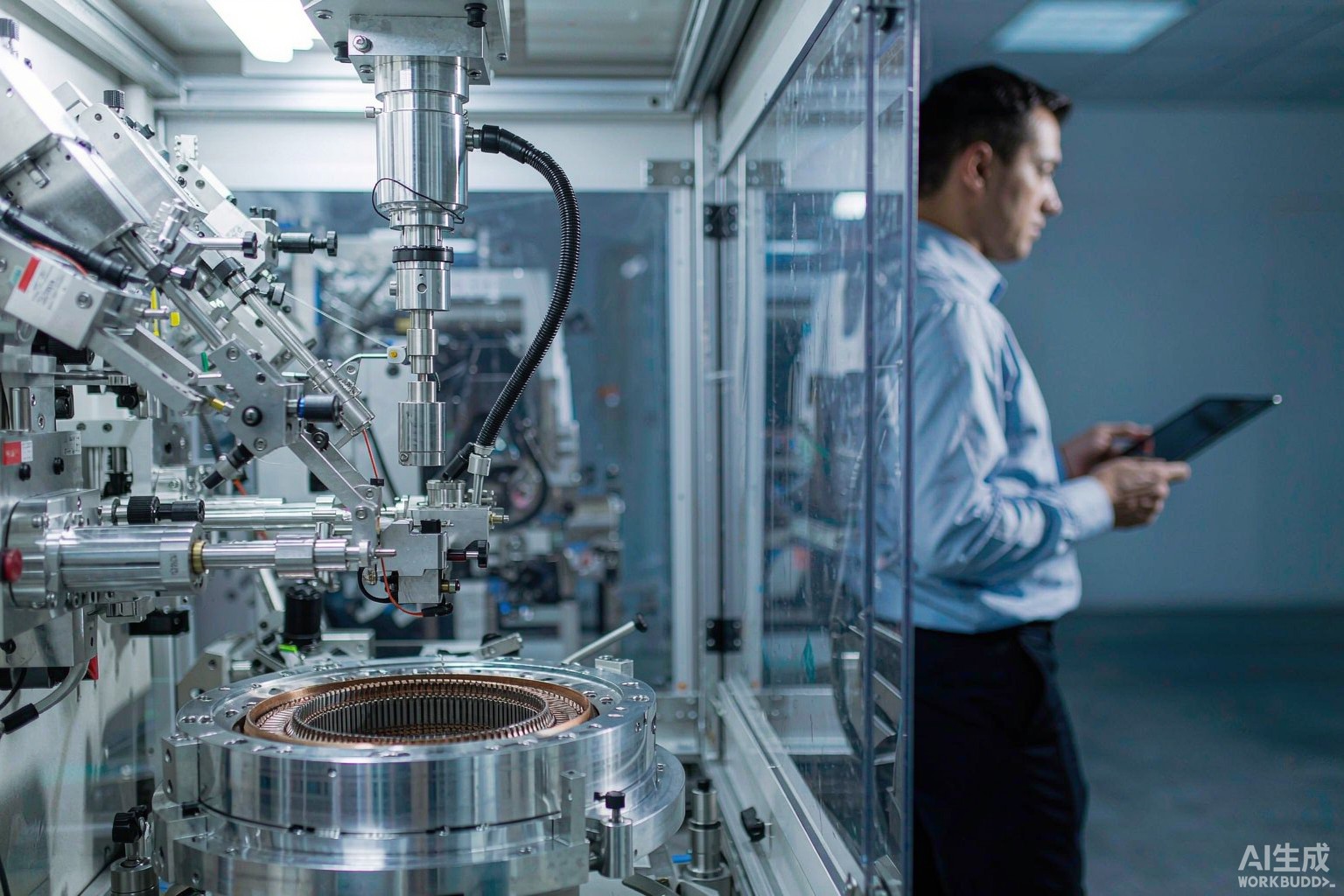
Motor stators dominate the conversation about coil winding, but they are not the only parts that need a conductor placed accurately, repeatedly and without damage. Sensor coils, small actuators, inductive elements and assemblies inside optical modules all rely on the same basic operation while demanding very different things from the machine. Treating them as "small stators" is the fastest route to a rejected sample. This guide maps where precision winding fits outside the motor, where the tolerance stack changes, and how to brief a supplier for a non-motor part. For the motor-side process background, see our overview of winding machine types and processes.
Winding outside the motor stator
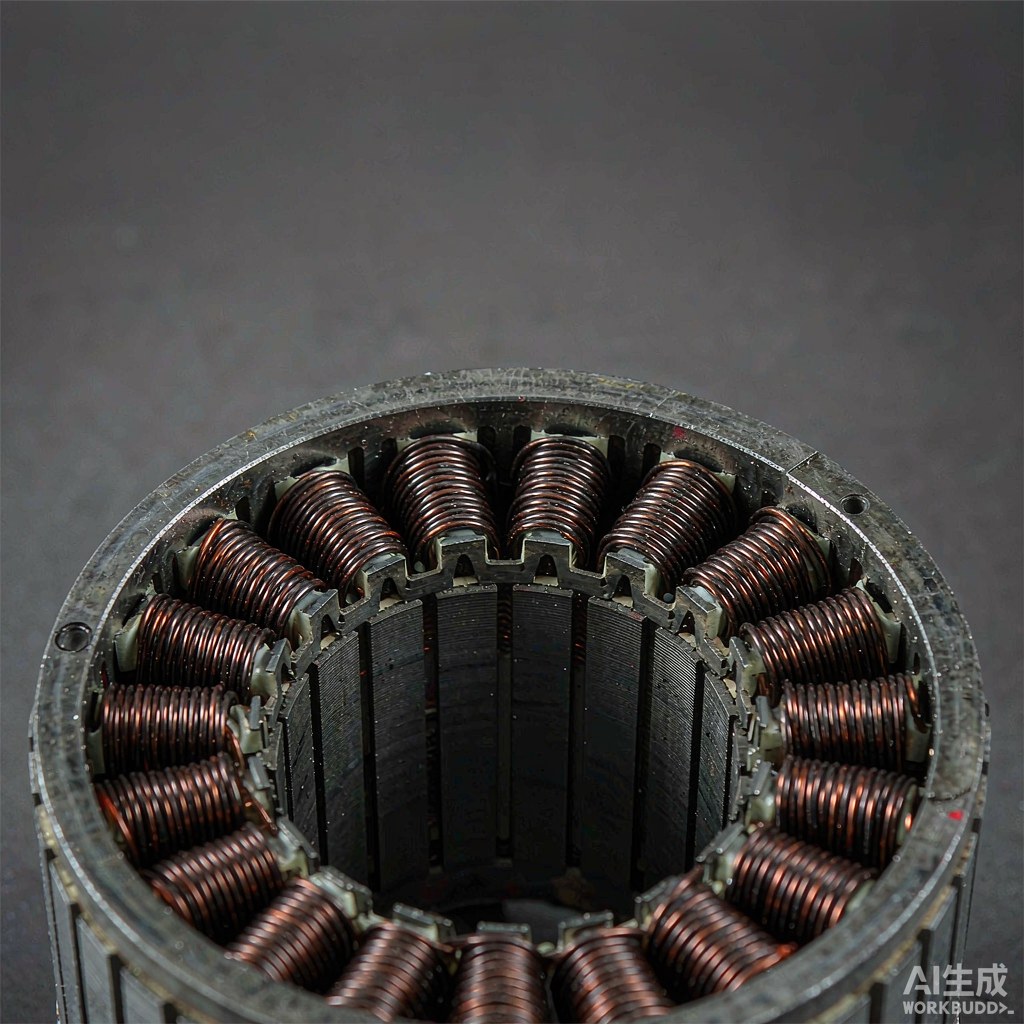
A stator winding is usually optimised for copper fill inside a slot, with a relatively large conductor and a well-defined end-turn envelope. Outside the motor, the coil is often the sensing or actuating element itself, so its electrical behaviour depends on geometry that is much smaller and less forgiving. A few turns displaced at a layer transition can shift inductance or sensitivity without producing any visible defect. The part may also be wound onto a bobbin that is part of the finished assembly rather than a fixture to be removed.
That changes the buying question. Instead of asking how fast a machine can fill a slot, the buyer needs to ask how the wire is guided onto a small or irregular former, how the start and finish leads are secured, and how the finished part is released without disturbing the winding. These are questions about handling and access as much as about spindle speed, and they are best answered with a sample run on the real part.
Sensor and actuator coils
Position, current and proximity sensors frequently use fine enameled wire on a compact former. The critical features are turn count, symmetry between windings, lead routing and the absence of mechanical stress at the termination. Because the wire is thin, the tension window is narrow: enough to place turns evenly, but low enough to avoid stretching the conductor or abrading the enamel. A machine set up for a heavier stator wire cannot simply be dialled down; the guides, nozzle and tensioner hardware usually need to match the wire diameter range.
Actuator coils add a thermal and mechanical dimension. The winding may sit inside a moving assembly, so its outer envelope, lead exit angle and impregnation behaviour matter as much as its resistance. Ask for dimensional data on the finished coil, not only an electrical test result. A part that measures correctly on the bench but binds in the housing is a geometry failure, and no amount of resistance testing will reveal it.
Optical module and small-signal assemblies
Small-signal assemblies used in optical modules and similar products combine fine coils with delicate surrounding components. Here the constraint is often access: the winding head and nozzle must reach the part without touching a nearby ferrule, lens holder or bonded joint. Fixturing has to hold the assembly without transmitting clamping force into an optical alignment. Lead dressing and the method of securing the wire after winding also become part of the specification.
Contamination control matters in a way motor stator production rarely considers. Dust from a guide, residue from a fixture or a stray strand of wire can affect an optical surface. Ask how the machine and fixture are cleaned, whether the wire path sheds particles, and what inspection is performed after winding. Xingte Technology, based in Shenzhen, supplies multi-axis precision winding machines, stator and rotor winding machines, and standard and customized automation solutions for automotive electronics, robotics, UAV and optical module production, with sample testing, on-site commissioning and after-sales support. That application range is relevant here, but it does not remove the need to qualify the process on the exact assembly.
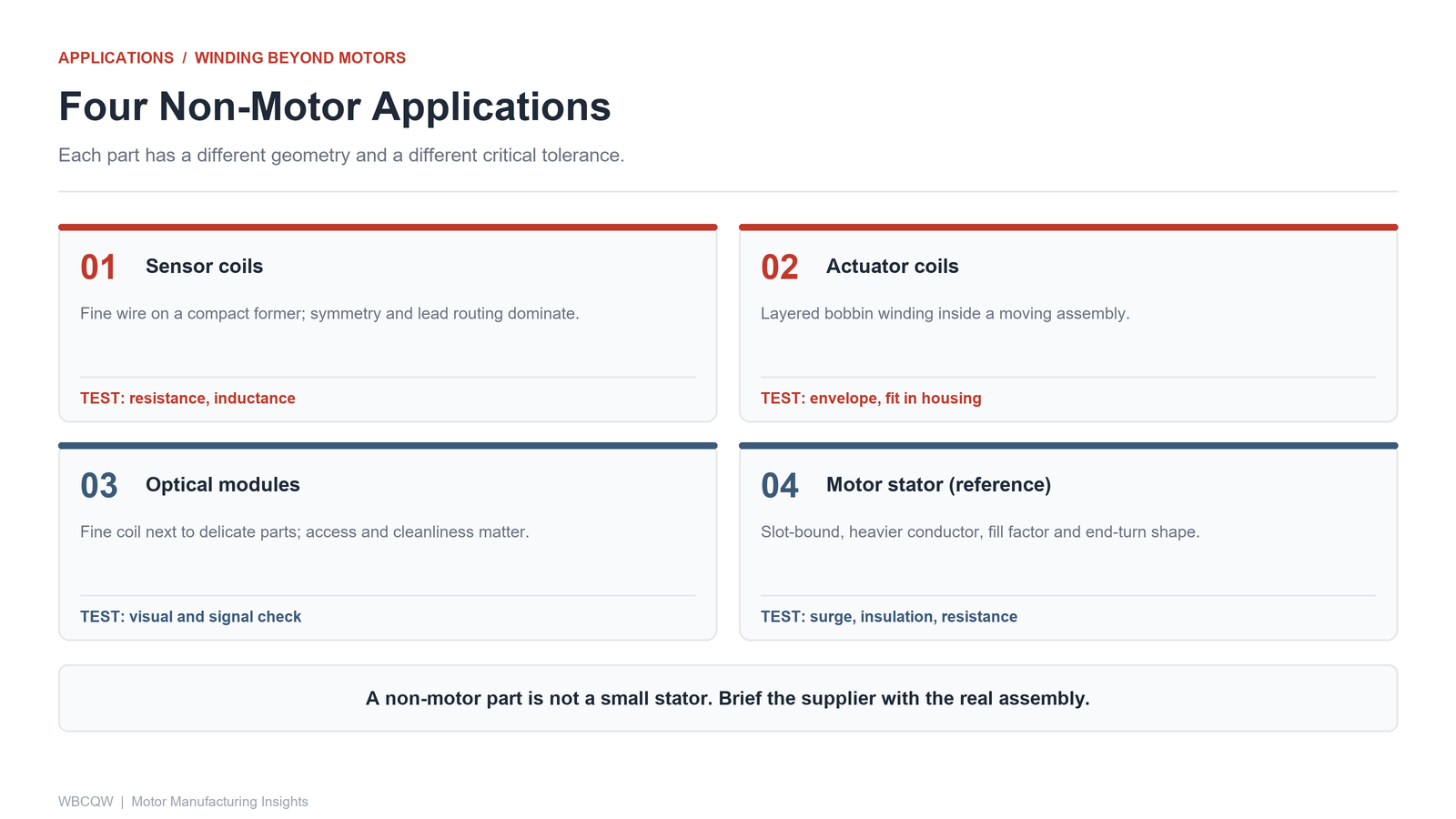
Fig. 1 - Four application families, each with a different geometry and a different critical tolerance. Illustrative diagram, not a product photograph.
Where tolerance stacks differ from motor coils
In a stator, the winding sits inside a slot whose dimensions dominate the stack. In a small coil, the winding can be the largest contributor: bobbin diameter tolerance, wire enamel thickness, layer build and lead routing combine to set the final envelope. A fill-factor target that is useful in a slot becomes almost meaningless on a bobbin, where the number of turns and the outer diameter are the controlling values.
Measurement conditions also move. Resistance on a fine coil is sensitive to temperature and to contact resistance at the test probes, so a stated soak time, clamp position and reference part are essential. Inductance or signal behaviour may depend on the presence of a core or a nearby metal part, so the test fixture must be defined as part of the specification. Agreeing these conditions before a sample run avoids the common dispute in which supplier and customer both measure "the same" part and get different numbers.
Limits of a motor-focused winding platform
A platform built for stators is optimised for a certain wire diameter range, part size and tooling envelope. It may not accept a tiny bobbin, may lack the fine tension resolution needed for very thin wire, or may have a nozzle and guide set that cannot reach a crowded assembly. Multi-axis capability helps with access and lead placement, but it does not by itself make a machine suitable for fine wire or for a clean assembly process.
State the boundary honestly in the requirement brief: wire diameter and enamel grade, bobbin material and dimensions, number of turns, lead exit and termination method, allowable envelope, test conditions and target output. Then judge the proposal by a sample wound on your part. A supplier who asks for a drawing, a wire sample and the test method before quoting is usually easier to work with than one who quotes immediately from a part number.
| Application | Coil geometry | Critical tolerance | Typical test |
|---|---|---|---|
| Position or current sensor | Fine wire on compact former | Turn count, symmetry, lead routing | Resistance at stated temperature, inductance |
| Small actuator coil | Layered bobbin winding | Outer envelope, lead exit angle | Dimensions, resistance, fit in housing |
| Optical module assembly | Fine coil adjacent to delicate parts | Access, cleanliness, clamp force | Visual inspection, signal or resistance check |
| Motor stator (reference) | Slot-bound, heavier conductor | Slot fill, end-turn envelope | Surge, insulation, resistance, dimensions |
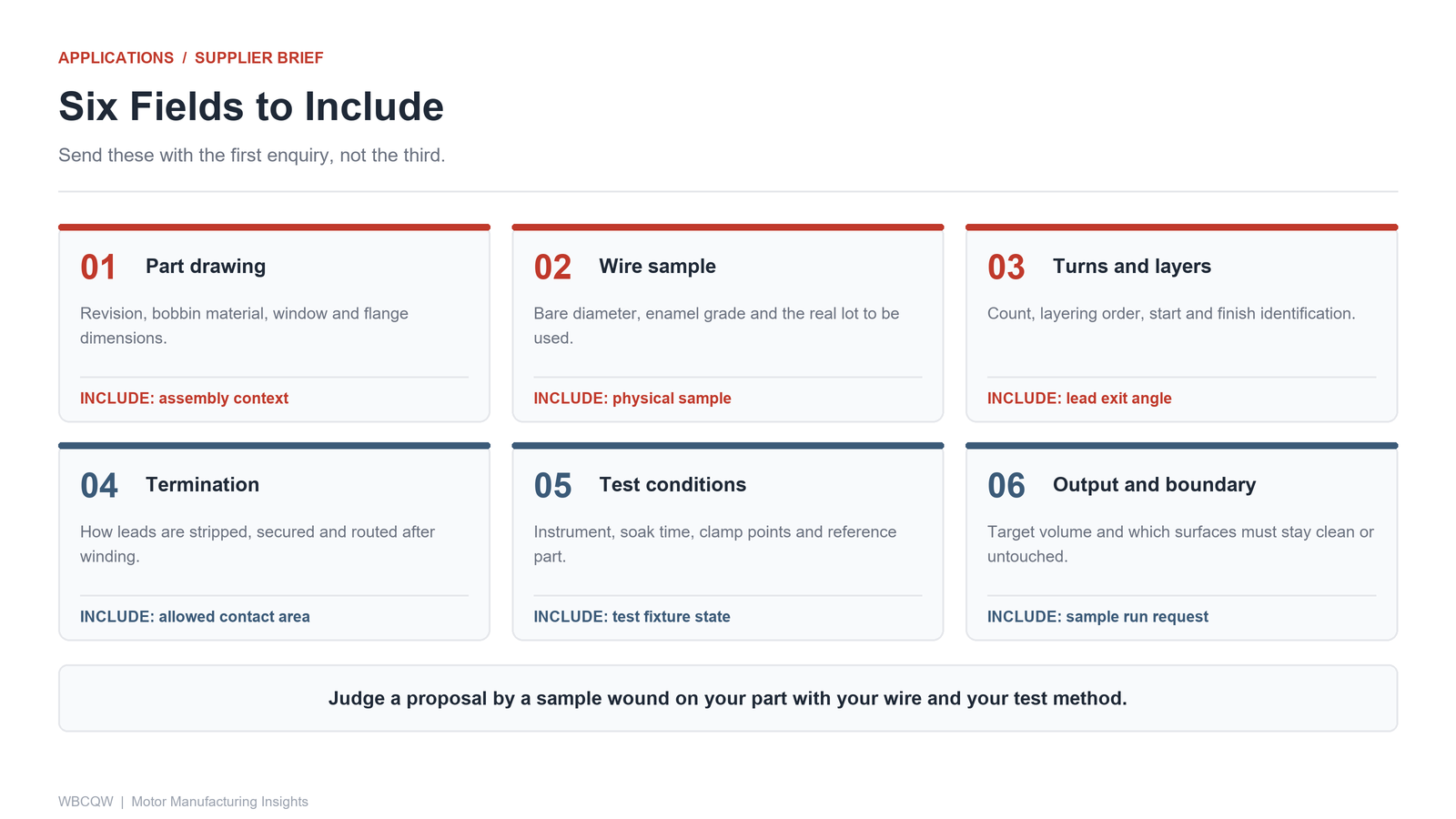
Fig. 2 - Six fields to include when briefing a supplier for a non-motor part. Illustrative diagram, not a product photograph.
How to brief a supplier for a non-motor part
Put the part drawing, wire sample and test method in the first enquiry, not the third. Include the assembly context: what the coil sits next to, what cannot be touched, and which surfaces must stay clean. State how the leads are terminated and where they exit, because that often decides the fixture design. Ask for a sample run with the actual wire lot and a written record of the setup used, then repeat the key measurements at your own site under the same conditions.
The wider industry discussion on automation and manufacturing trends can help frame the business case, but the technical decision stays specific to the part. Precision winding outside motors is not a smaller version of stator production; it is a different tolerance problem with different evidence. A supplier who can show a controlled process on your assembly, with a documented baseline and a clear statement of where their equipment stops fitting, is more useful than one who claims a universal machine.