A delivery figure in an equipment news item looks like a date, so it is tempting to drop it straight into a project schedule. A quoted interval describes one supplier scope under one set of assumptions; it is not the day a machine starts making parts in a factory. Our guide to verifying winding machine accuracy before purchase makes the same point: a value means little without the conditions that produced it. This article treats a lead-time claim as an input to be unpacked, not a promise to be booked.
Why a lead-time figure is not a delivery date
A lead-time figure describes a supplier-side interval measured from a defined starting event, such as order acknowledgement, a cleared deposit, or drawing approval. It is not the date a machine is running production parts at a buyer site. News releases rarely name the trigger, so two identical figures can describe quite different commitments. The clock often starts only after conditions the buyer controls are satisfied.
What the quoted interval usually includes
Treat the interval as a bundle of activities rather than a single duration. In many announcements it covers order processing, procurement of long-lead components, assembly, and a factory test before release for shipment. It generally excludes freight, installation, and any time the machine waits at a site that is not prepared. Some suppliers fold an engineering phase into the window; others assume a frozen configuration and count build time only.
Because the boundary is seldom printed, the useful question is what must be true before the interval can begin. Signed drawings, an approved sample, a confirmed layout and a cleared milestone are common preconditions. A release that quotes a window without listing these inputs leaves the buyer unable to tell whether the clock has started. Industry coverage tends to flatten these distinctions, a pattern reviewed in our overview of how equipment announcements frame delivery claims.
Configuration and sample-testing steps inside the interval
For a customized machine, part of the quoted window is work the buyer experiences as decision-making, not fabrication. Sample winding trials, fixture design, program development and a first-article review can all sit inside it. When a supplier runs a trial using wire and parts supplied by the buyer, the time to ship those materials and approve the result belongs to the timeline yet is easy to miss.
Configuration also changes the interval. A standard machine held in stock and a multi-axis system built for a specific stator will not share one schedule, even if a news item quotes a single figure for the product family. Ask which configuration the figure refers to, whether the options are already engineered, and whether a sample test is a gate that can extend the window. A figure attached to an unbuilt configuration is closer to an estimate than a commitment.

Fig. 1 - A delivery interval only becomes useful once its boundaries and exclusions are written down. Illustrative image, AI-generated, not a product photograph.
Site readiness, utilities and acceptance on the critical path
The supplier interval can finish on time while the project still slips, because a machine cannot be commissioned into a site that is not ready. Power, compressed air, floor loading, access routes and ambient conditions have to exist before installation. These are buyer-side tasks with their own dependencies, and they often sit on the critical path without appearing in the delivery claim at all.
Acceptance is a second boundary. A machine that passed a factory test has not necessarily passed an on-site acceptance test using production parts. If acceptance is part of the supplier obligation, its criteria and duration belong in the schedule. Separate the moment the machine ships from the moment it is accepted, and name who owns each step between them.
| Claim element | What the release usually states | What to confirm | Why it matters |
|---|---|---|---|
| Clock start | From order placement | The triggering event and its date | Two figures may not share a start point |
| Preconditions | Rarely listed | Drawing approval, deposit, sample sign-off | The interval cannot begin before these clear |
| Configuration | A product family name | Exact options and whether already engineered | Stock and custom builds follow different schedules |
| Sample testing | Implied or omitted | Whether a winding trial is a schedule gate | Buyer-supplied materials add elapsed time |
| Factory test | Tested before shipment | Scope of the test and the record kept | A factory test is not site acceptance |
| Freight and installation | Normally excluded | Who books transport and who installs | The longest unowned segment often sits here |
| Site acceptance | Sometimes bundled | Criteria, duration and responsible party | Defines when the machine can make parts |
How to compare two announcements on equal terms
Two lead-time claims become comparable only after they are normalized to the same boundaries. Run each announcement through identical questions: what starts the clock, which configuration is covered, what preconditions apply, whether a sample test is included, and where the obligation stops. Only then does a difference between the figures carry meaning. A shorter interval built on a frozen stock machine is not the same product as a longer one that includes custom engineering.
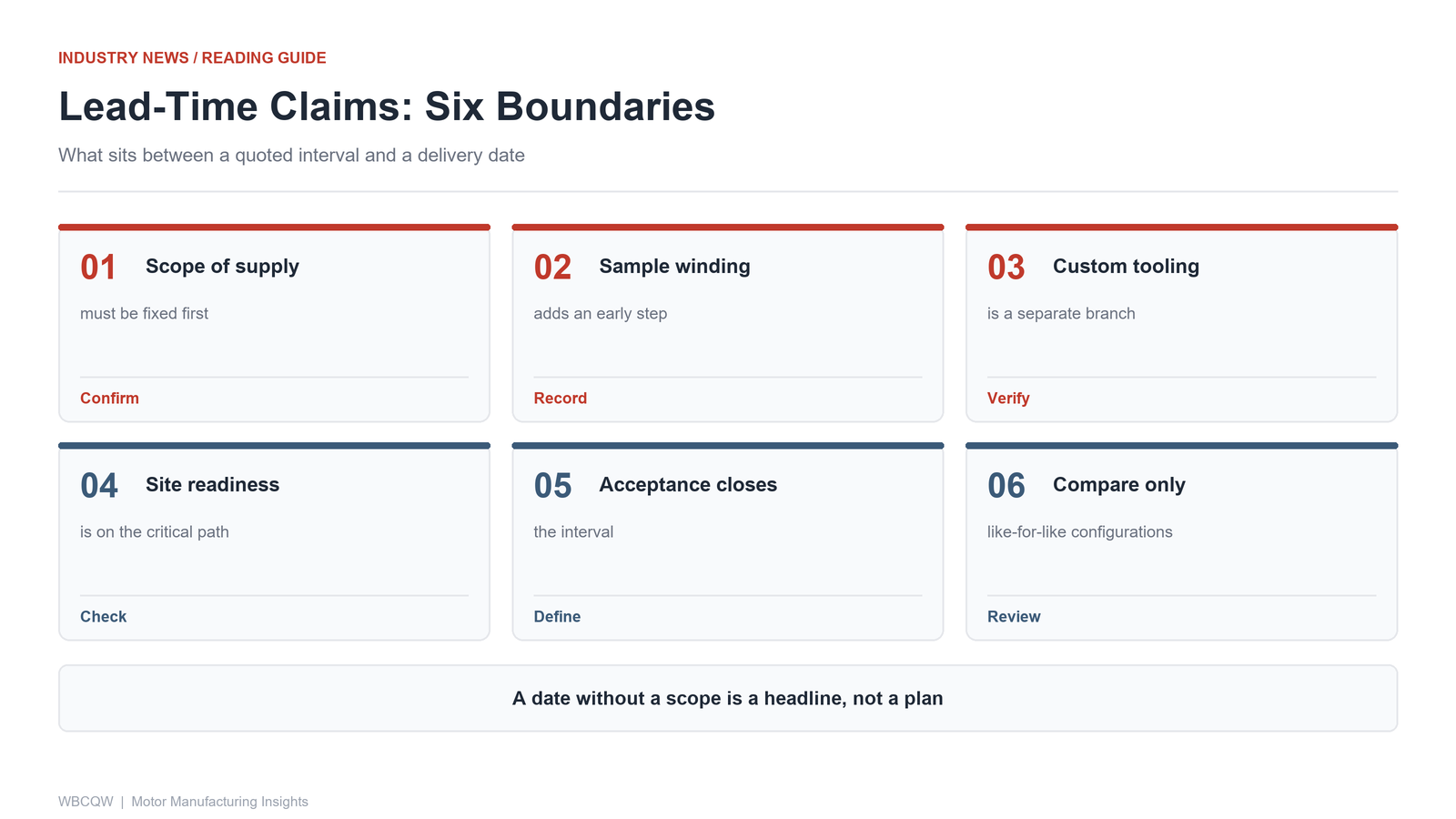
Fig. 2 - Six elements that sit between a quoted lead time and a usable delivery date. Illustrative diagram, not a product photograph.
A short reading checklist for planning
A short checklist turns a headline into something a planner can use. Confirm the trigger event, list the preconditions, fix the configuration, identify any sample-test gate, name the test and acceptance boundaries, and assign owners to freight, installation and site readiness. Record who confirmed each item and when, so an assumption can be revisited rather than silently absorbed into the plan.
The limits of this reading deserve a plain statement. A delivery claim in a news release is a marketing summary, not a contract term, and careful reading cannot predict supplier capacity, component shortages or logistics delays. The method makes hidden assumptions visible and sharpens the questions a team asks, but it does not convert an estimate into a guarantee. That requires a signed order with defined scope, milestones and remedies, and even then the buyer-side tasks remain on the critical path.