Buyers often judge a winding machine by its mechanics and only discover the parts policy when something stops. That is backwards: the documents that define which components can be replaced, revised or repaired largely determine how long the machine stays supportable. A spares list is not a sales attachment; it is an engineering statement about wear, interchangeability and design life. Reading it well means setting aside promised response times and looking at what is actually specified, as our review of long-term equipment support commitments explains. This article treats the parts policy, the upgrade path and the boundary between them as things to be inspected, not accepted.
Why a spares policy is an engineering document
A credible spares policy names real parts, not intentions. It identifies each item by part number, revision, quantity and the assembly it belongs to, and it states which items are expected to wear and which are expected to last the machine life. That information encodes assumptions about duty cycle, materials and maintenance intervals. Without it, a buyer cannot tell whether the supplier has actually engineered for serviceability or simply assembled a catalogue.
Consumables, wear parts and capital spares are different categories
Lumping every replaceable item into one list hides the decisions that matter. Consumables are used up in normal operation and bought routinely, such as guides, nozzles or cleaning media. Wear parts degrade on a predictable curve and are replaced on condition or at planned intervals. Capital spares are expensive, rarely needed modules kept to avoid a long outage, such as a drive or a controller.
Each category needs a different kind of evidence. A consumable needs a clear specification and a second source; a wear part needs an expected life basis and an inspection method; a capital spare needs a failure-risk argument and a storage plan. Treating them alike leads to overstocking cheap items and under-protecting the one module whose failure stops the line. The categories should be separated physically in the list and in the store.
How to read a recommended spares list
Read a recommended list line by line against the machine. Check that every part number matches the installed revision, that quantities are tied to the number of spindles or axes, and that each item has a stated purpose rather than a vague label. A line such as a generic tensioner kit is not traceable to a specific assembly and cannot be verified on receipt.
Look for what is missing as carefully as what is present. Fasteners, seals, sensors and cable assemblies are cheap to omit from a list and expensive to discover during a breakdown. Confirm whether the list covers commissioned options and any custom tooling, since a retrofit or a special fixture often introduces parts absent from the standard document. Ask for a revision date and a change log so a later order can be checked against the machine as built.
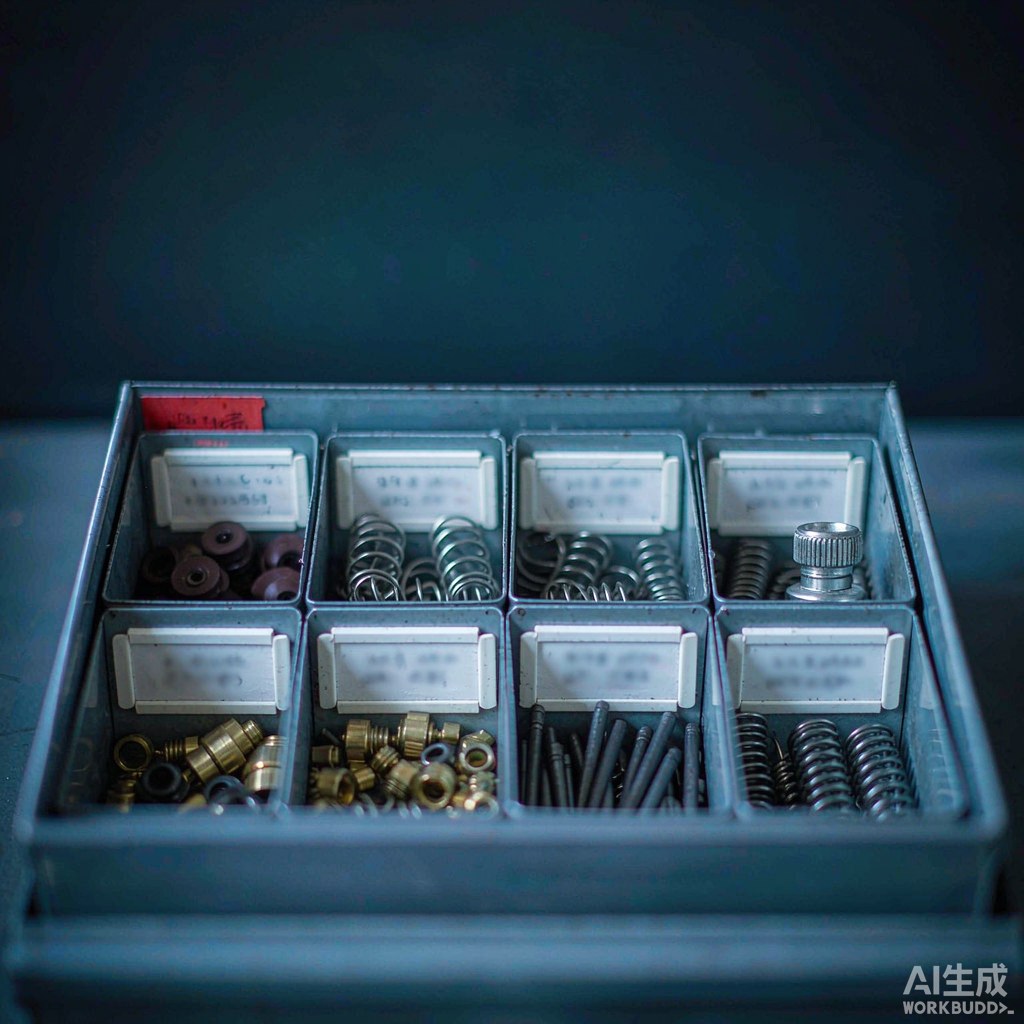
Fig. 1 - A labelled parts drawer makes a support policy concrete: names, revisions and quantities. Illustrative image, AI-generated, not a product photograph.
Upgrade paths and what counts as a retrofit
An upgrade path describes how a machine can gain capability over time, and the useful question is where an upgrade ends and a retrofit begins. A software or parameter change that uses existing hardware is one thing; adding an axis, a vision module or a new tensioner is another. The distinction matters because the second usually touches wiring, guarding, safety validation and the spares list itself.
Ask which upgrades are field-installable, which require a return to the supplier, and which are simply not offered after a certain revision. Ask, too, whether an upgrade changes the part numbers of service items. A machine sold as future-ready can still strand an owner if each new option silently invalidates the recommended spares. Our comparison of retrofit and replacement decisions sets out how to weigh that trade-off.
| Part category | What the list should state | Question to ask | Record to keep |
|---|---|---|---|
| Consumable guides and nozzles | Material, size, second source | Is a substitute qualified | Approved supplier and spec sheet |
| Wear parts | Expected life basis, inspection method | What condition triggers replacement | Inspection log and intervals |
| Drive and controller modules | Part number, revision, firmware level | Is a replacement board compatible | As-built revision and firmware record |
| Sensors and cable assemblies | Connector type, length, pinout | Are custom options covered | Wiring diagram and part mapping |
| Seals, belts and fasteners | Dimension, rating, quantity | Are these on the standard list | Receipt check against machine |
| Custom tooling and fixtures | Drawing number and revision | Who holds the manufacturing data | Released drawing set |
| Retrofit-added parts | New part numbers introduced | Does the spares list get updated | Change log and list revision date |
Obsolescence, drawings and the right to repair
Every component has a finite production life, so a parts policy is incomplete without an obsolescence position. Find out how the supplier notifies owners when a part is withdrawn, whether a substitute is qualified, and how long drawings and firmware remain available. A discontinued drive with no documented replacement can end the serviceable life of a machine regardless of its mechanical condition.
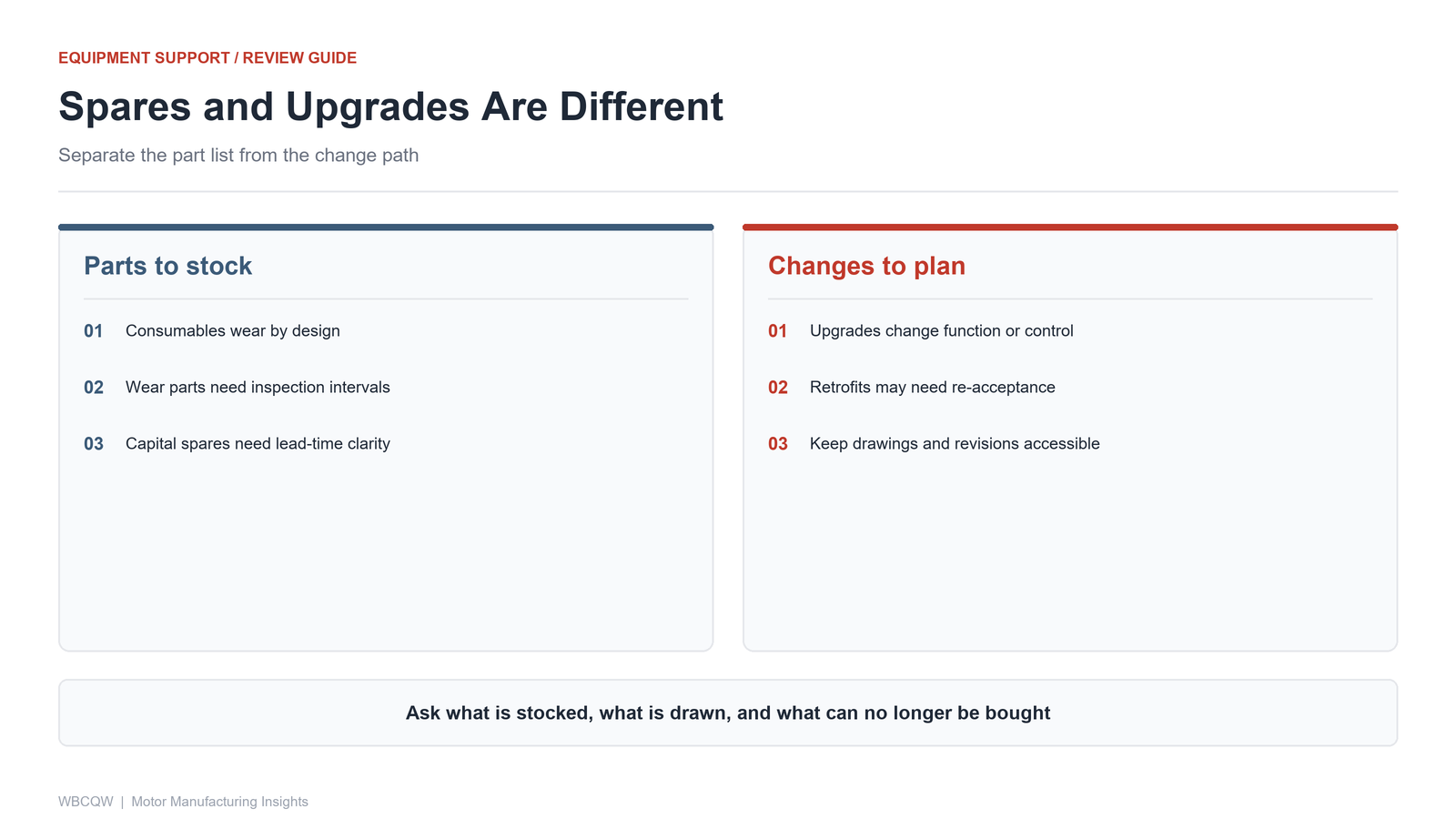
Fig. 2 - Three part categories and the different evidence each one needs. Illustrative diagram, not a product photograph.
A question set for a support review
A support review works best as a fixed set of written questions. Ask for the parts list by revision, the categorization of each item, the basis for recommended quantities, the obsolescence notice process, the available drawings, and the boundary between user service and supplier service. Request written answers with dates, because a verbal assurance is hard to audit after the people involved have moved on.
The limits of this assessment are worth stating. A well-documented policy shows that a supplier has thought about serviceability; it does not prove that parts will be available, that a substitute will perform the same, or that an upgrade will be offered years later. Market withdrawals, design changes and commercial decisions sit outside any document. The review reduces uncertainty and gives a buyer leverage in negotiation, but it cannot guarantee how long a machine stays supportable, only make its assumptions visible.