A dashboard showing live tension looks like traceability, but it is a display, not a record. Reconstructable history comes from decisions made before the line runs: what identifies a single part, which values are kept, where a handoff is logged, and whose clock stamps the event. This guide treats those choices as a specification to be written and agreed, rather than as a feature to be switched on, and ends with a data-point sheet that avoids collecting everything. For the handoff boundary in particular, see the note on designing station handoff records. It sets no retention period or schema standard, because those depend on the product and the plant.
Why traceability is a specification, not a screen
Traceability is the ability to answer a question about a specific part after it has left the station: which wire lot, which program, which tension reading, which operator action. A screen can show those values while the part is present and forget them a second later, so specifying the display is not the same as specifying the record. The work is in defining the data points, their identifiers and the boundaries where one system passes a part to another.
Part identity and the unit of traceability
Decide first what a single traceable unit is. On a winding line it might be an individual coil, a stator, a pallet of parts, or a batch that shares a wire lot, and the choice determines whether a later question can be answered about one item or only about a group. Assign the identifier at the earliest point the part becomes distinct and carry it unchanged through every station, because a re-generated ID at a handoff is the most common break in the chain.

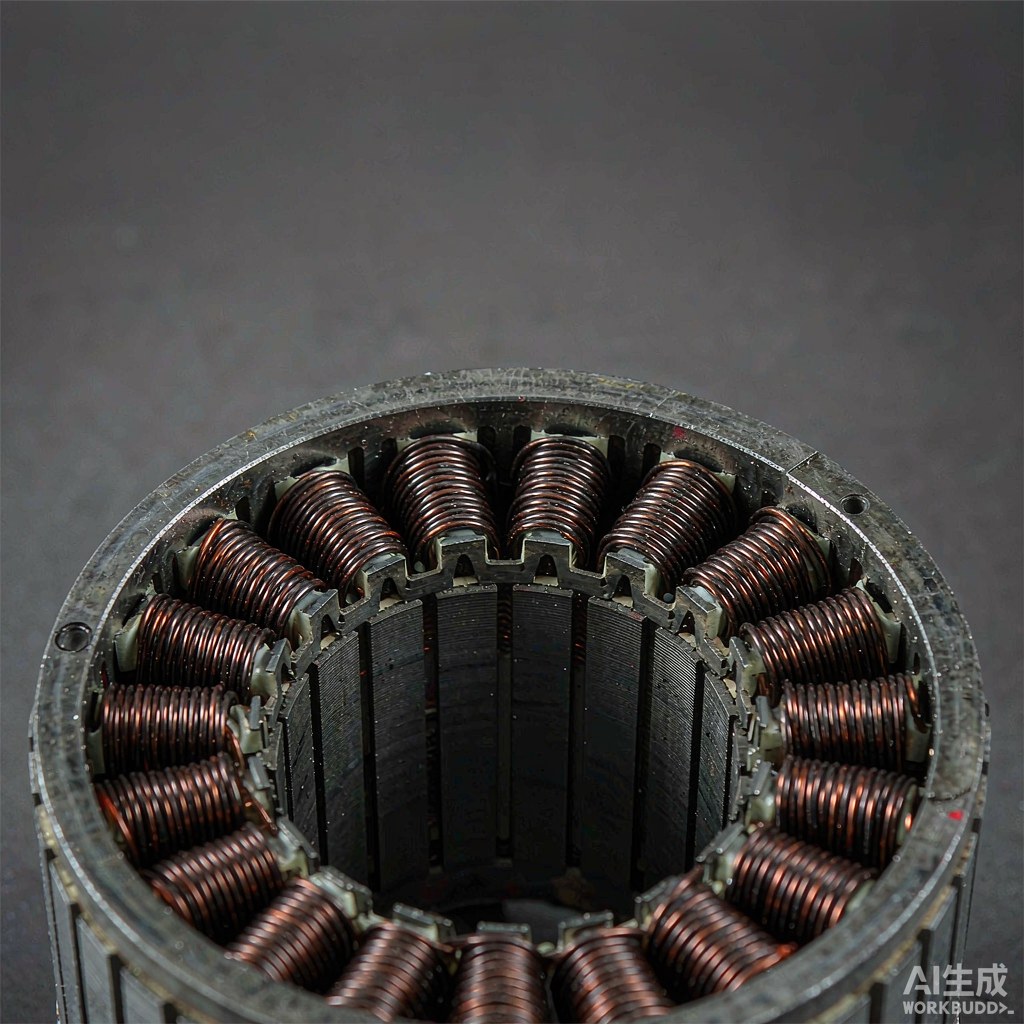
Fig. 1 - A recorded identifier at the station handoff is what links a coil to its history. Illustrative image, AI-generated, not a product photograph.
Which process values are worth storing
Store values that can change the part and values needed to interpret a measurement, and be cautious about the rest. Obvious candidates are the program revision, wire lot, tension setpoint and any verified peak, turn count, resistance with its measurement conditions, and the pass result of the relevant test. Ambient state and instrument identity belong too, because a resistance reading without a temperature reference cannot be compared with a later one.
| Data point | Where it is captured | Why it is stored | Retention owner |
|---|---|---|---|
| Part identifier | First station after the part is distinct | Links all later events to one unit | Line controls owner |
| Wire lot and program revision | Spool change and program load | Explains packing and resistance differences | Process engineering |
| Tension setpoint and verified peak | Winding station, at point of use | Interprets breakage or loose-turn faults | Process engineering |
| Turn count and resistance | Test station with conditions noted | Confirms the part against the drawing | Quality owner |
| Station handoff event | Each source and destination boundary | Keeps the chain unbroken between systems | Line controls owner |
| Timestamp and clock source | Every logging controller | Preserves event order across stations | Controls or IT owner |
| Pass or rework result | Final test and any rework step | Defines what left the line and why | Quality owner |
Station handoffs, timestamps and clock alignment
A part crossing from winding to testing to packing passes between systems that may not share a database, and each boundary is a place where history can break. Specify that every handoff writes an event with the part ID, the source and destination station, and a timestamp, and that the receiving station confirms the ID rather than assuming it. An unacknowledged handoff is how a good coil ends up attached to the wrong record.
Retention, access and the limits of the record
For every data point, name who owns it, how long it is kept, and who may read it. Process values, test results and identifiers often have different retention needs, and a single blanket rule either discards useful history too early or keeps far more than is justified. Access matters as much as retention: a record that can be edited without a trace is weaker than one that is append-only, and the specification should say how corrections are recorded.
State plainly what the record cannot do. It does not replace inspection, it cannot reveal an event that was never measured, and it does not by itself prove that a coil meets a requirement, only that certain values were stored against its ID. Retention also has a physical limit in storage cost and a legal one set by product and contract, neither of which a generic guide can fix. Where accuracy claims are being made about the machine itself, the separate discussion of evaluating stator winding machine accuracy is the right place for them, not the traceability sheet.
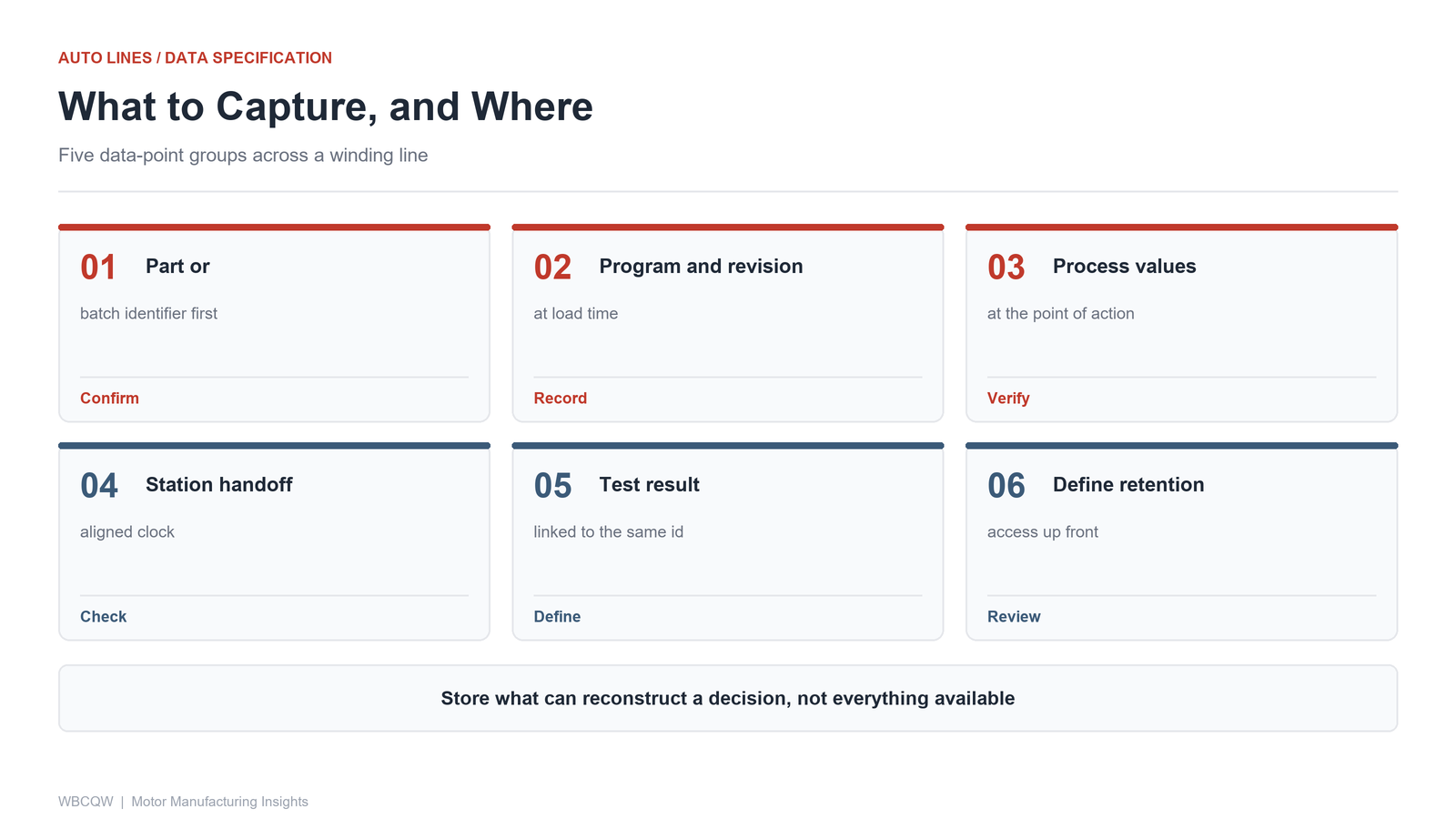
Fig. 2 - Five data-point groups that make a winding line history reconstructable. Illustrative diagram, not a product photograph.
A data-point specification sheet
Pull the decisions into one sheet with a row per data point: its name, where it is captured, why it is stored, and who owns its retention. Add a short header defining the traceable unit, the identifier scheme, the time source and the handoff rules, so the sheet can be read without the surrounding document. Such a sheet is a contract between process, quality and controls engineers, and it is far easier to review than a screen mock-up.
Keep the sheet honest about its own limits. It defines what should be recorded, not that recording always succeeds, so it should name a verification step that confirms a few parts can actually be reconstructed end to end. A specification that has never been tested against a real part is an assumption. Used as a living document, revised when a station or program changes, it turns a collection of logs into a history that can genuinely be followed backward from a finished coil.