Adding spindles is often sold as a simple way to multiply output, but a multi-spindle machine is not a single-spindle one built several times. Spindle count changes changeover, how a fault spreads, and how much inspection the line carries. A buyer comparing the two on output alone discovers the rest after installation. This article sets out where each architecture fits and leaves a general guide to evaluating machine accuracy before purchase as separate reading. The comparison is about architecture, not which machine is better in the abstract.
Why spindle count is an architecture choice
Spindle count decides how work is divided. On a single-spindle design one head, one wire path and one program make one part at a time; on a multi-spindle design several heads run in parallel under shared drives, tension and controller. That sharing is the source of both benefit and risk. A change to one head affects the others, so the decision is about how the line behaves.
Match the choice to part mix and structure. A stable, high-volume part rewards parallelism; a varied, frequently changed mix rewards the simplicity of one head. Neither is a scaled version of the other, and multiplying the single-spindle rate by the head count misses most of what changes.
Output is not linear in spindle count
Doubling heads does not double delivered output, because the machine runs only as fast as its slowest shared constraint. A common tensioner, a shared traverse drive or one loading step can cap the rate all heads achieve together. Availability multiplies too: if one head stops the whole machine may stop, so interruptions rise with head count even when each head is reliable.
Verify sustained output over a realistic run - spool changes, inspections, occasional stops - not the ideal cycle of one uninterrupted part. A qualitative comparison is more honest than a multiplied theoretical rate, since the losses come from shared resources and downtime, not the winding motion.
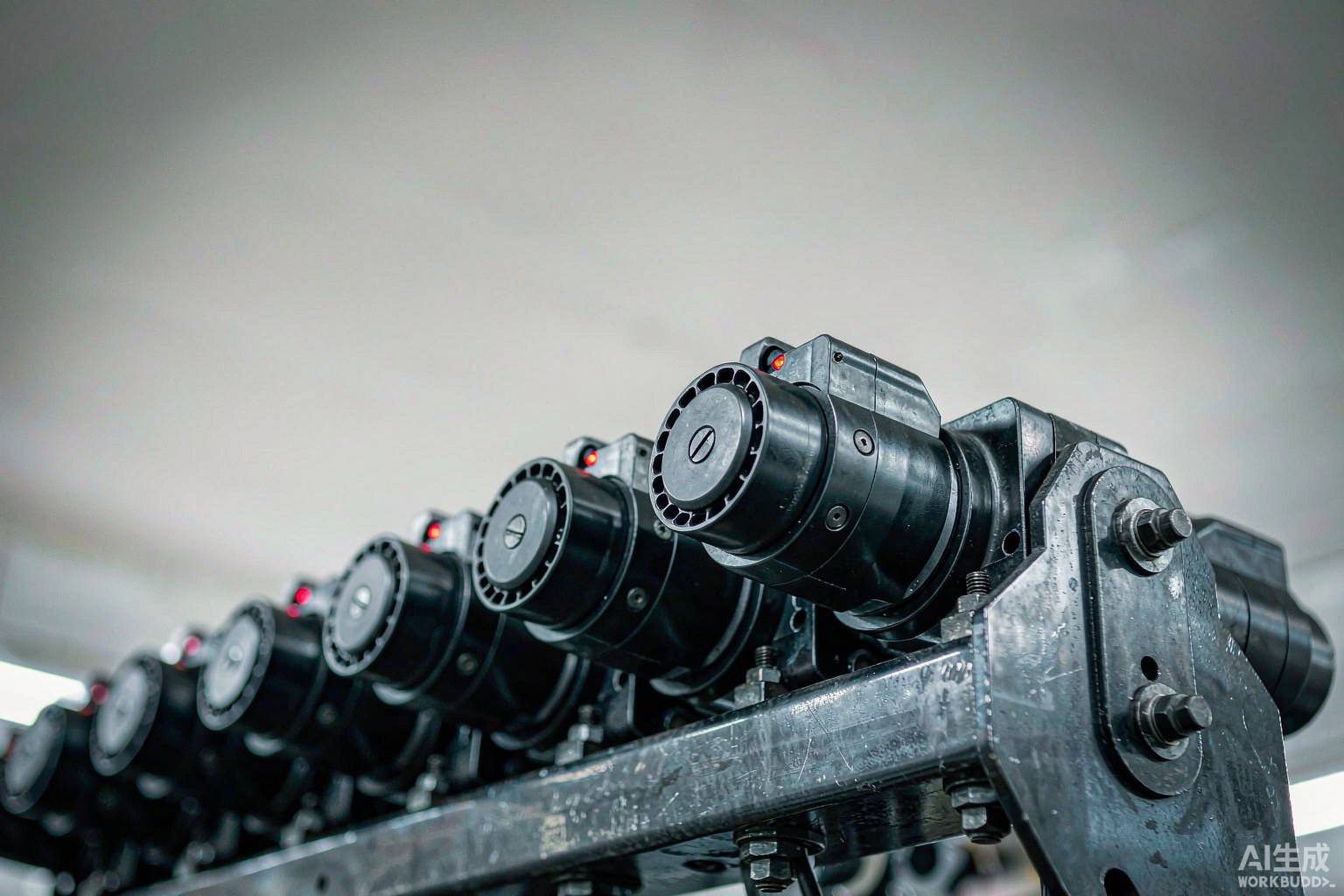
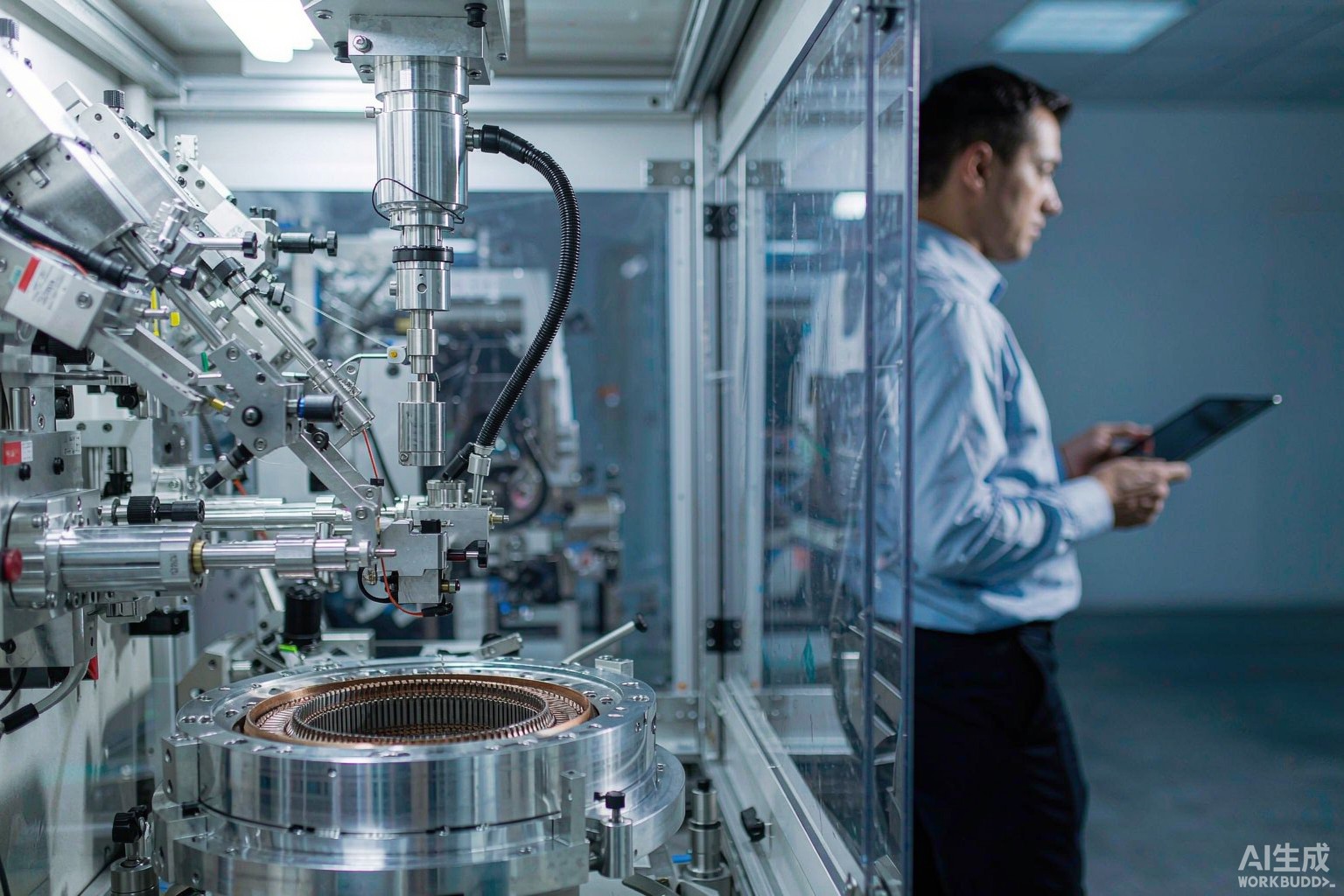
Fig. 1 - A repeated spindle head shows why output and inspection load rise together. Illustrative image, AI-generated, not a product photograph.
Changeover, fixtures and program handling
Every head needs its own fixture, wire path and verified program, so a changeover on a multi-spindle machine is several changeovers done consistently. Small differences - a worn guide on one, tension slightly off on another - become part-to-part variation a single head never has to reconcile. Revisions must reach every head, and a version mismatch is easy to create and hard to spot.
This is why high-mix work favours fewer heads: one machine retools and re-qualifies in a single sequence, the other repeats it across stations then proves they agree. For what a supplier should document about configuration, a data-capture specification for automated lines is useful when several heads must stay aligned.
Fault propagation and inspection load
A systematic fault on a multi-spindle machine repeats across heads. A wrong shared tension or an inherited program error can put the same defect on every part in a cycle, turning a small mistake into a batch of suspect parts. On a single head the same mistake makes one bad part. Inspection load rises accordingly, and a missed fault costs more.
Detection is harder too, because an average across heads can hide one that has drifted. Verification must be per head, not per batch, and the record must identify which head made which part. The limit is worth stating: more spindles do not automatically mean better control, only more places where control can quietly differ.
| Dimension | Single-spindle machine | Multi-spindle machine | What to verify |
|---|---|---|---|
| Output behaviour | One part per cycle | Several parts per cycle | Sustained rate including stops |
| Changeover | Single head to retool | Several heads to align | Whole part mix and revision handling |
| Fault spread | One part at a time | Same fault across heads | Per-head identification in the record |
| Inspection load | Lower part count | Higher part count | Coverage matched to output |
| Shared resources | Mostly dedicated | Common drives and tension | Where the rate is actually capped |
| Best fit | High-mix, frequent changes | Stable, high-volume parts | Real variant mix on a sample run |
| Program control | One program instance | Several instances to match | Version agreement across heads |
Which parts suit each architecture
Geometry and volume decide the fit more than any headline output. A compact part with a difficult window, delicate fine wire or frequent revisions rewards the attention one head allows; an operator can watch one placement without coordinating stations. A simple part in long, stable runs rewards parallelism, since setup cost is amortised and shared constraints rarely bind. Between them, the answer depends on how often the line stops.
Be cautious of comparisons assuming the part is already characterised. If the program is still being developed, one head is the cheaper place to learn, because a mistake costs one part. Moving a proven process to more heads later is a separate qualification, not a copy operation.
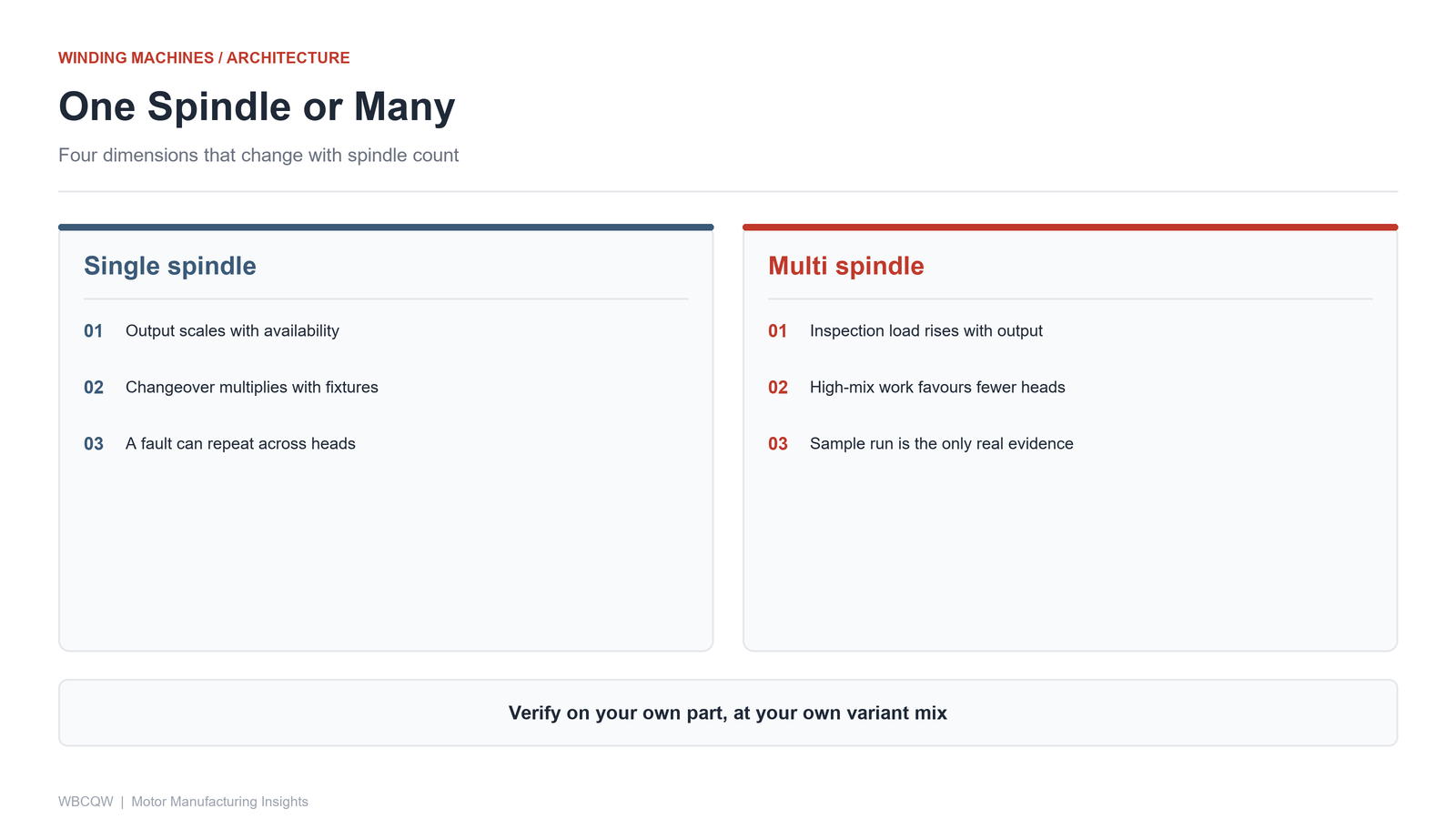
Fig. 2 - Four dimensions where single-spindle and multi-spindle machines diverge. Illustrative diagram, not a product photograph.
A sample-run evaluation checklist
The only real evidence is a run on your own part, at your own variant mix, with your own wire. Ask for a sustained run, not a demonstration part, and record interruptions as carefully as good output. Check per-head consistency, changeover time, fault detection and what the record identifies. A multi-spindle machine should show its heads agree; a single-spindle one should show its changeover is quick.
Keep the parts and run log; they turn the decision into comparable evidence. The limit is that a sample run is one set of conditions on one day and cannot prove behaviour across every lot, operator and season. What it does is expose the shared constraints and per-head differences a multiplied output figure hides - precisely what the two architectures need judging on.