Moving a winding line is usually planned as logistics, but from the process view it is a change to the machine and its conditions. Cables are disconnected, alignments disturbed, programs restored and services reconnected, and each step can shift a result that was stable. A line that ran well before a move cannot be assumed to run well after. This article sets out the evidence a relocation record should carry, keeping a separate review of acceptance documentation as related reading. Re-qualify against what was captured, not against memory.
Why a move is a process change, not a logistics task
A winding result depends on alignment, tension path, program parameters, utilities and environment. A relocation touches all of them. A traverse axis re-levelled, a tensioner re-mounted or a guide re-threaded can change placement even with a byte-for-byte identical program. Treating the move as transport assumes the machine is a sealed box whose behaviour travels with it.
The practical consequence is that a move needs an acceptance event, not just a power-on test. Re-qualification shows whether the line still makes the same part, and the only fair reference is a baseline recorded before anything was unplugged. Without it, every post-move discussion becomes an argument about what 'normal' used to look like.
The pre-move baseline that must be captured
Capture the baseline while the line still runs well. Record program names and revisions, tension setpoints and measured peaks, traverse and pitch settings, alignment references and utility conditions at the point of use. Add results from representative parts - count, resistance with stated conditions, dimensions, layer appearance - and keep a retained sample. Photograph cable routing, guide positions and floor markings, since those are what a move loses.
A baseline of settings alone is weaker than one with results: settings say what the machine was told, results say what it did. For keeping such records consistent across stations, a data-capture specification for automated lines is useful. The limit is honest - a baseline describes one day and one set of conditions, a reference point rather than a permanent capability definition.
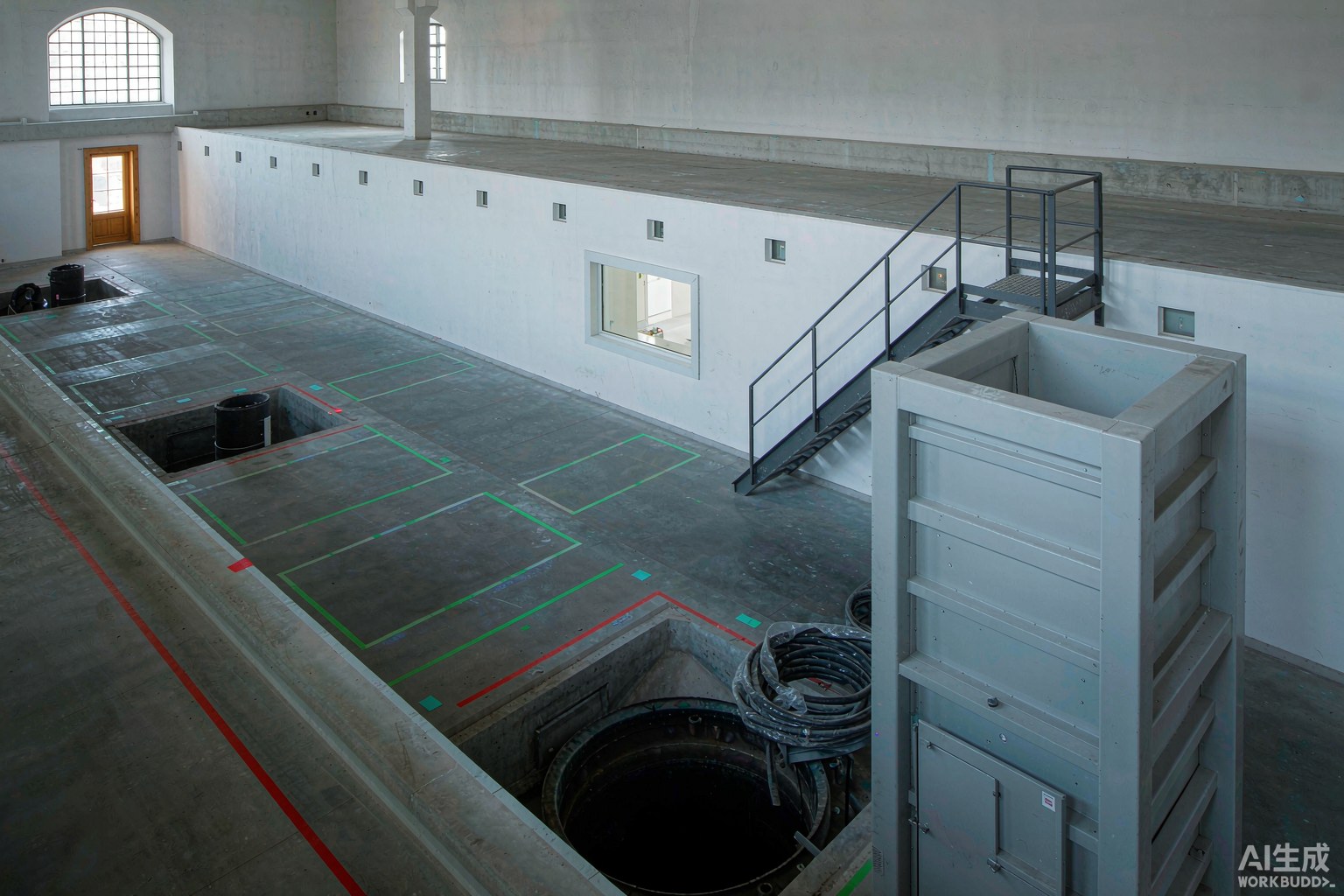
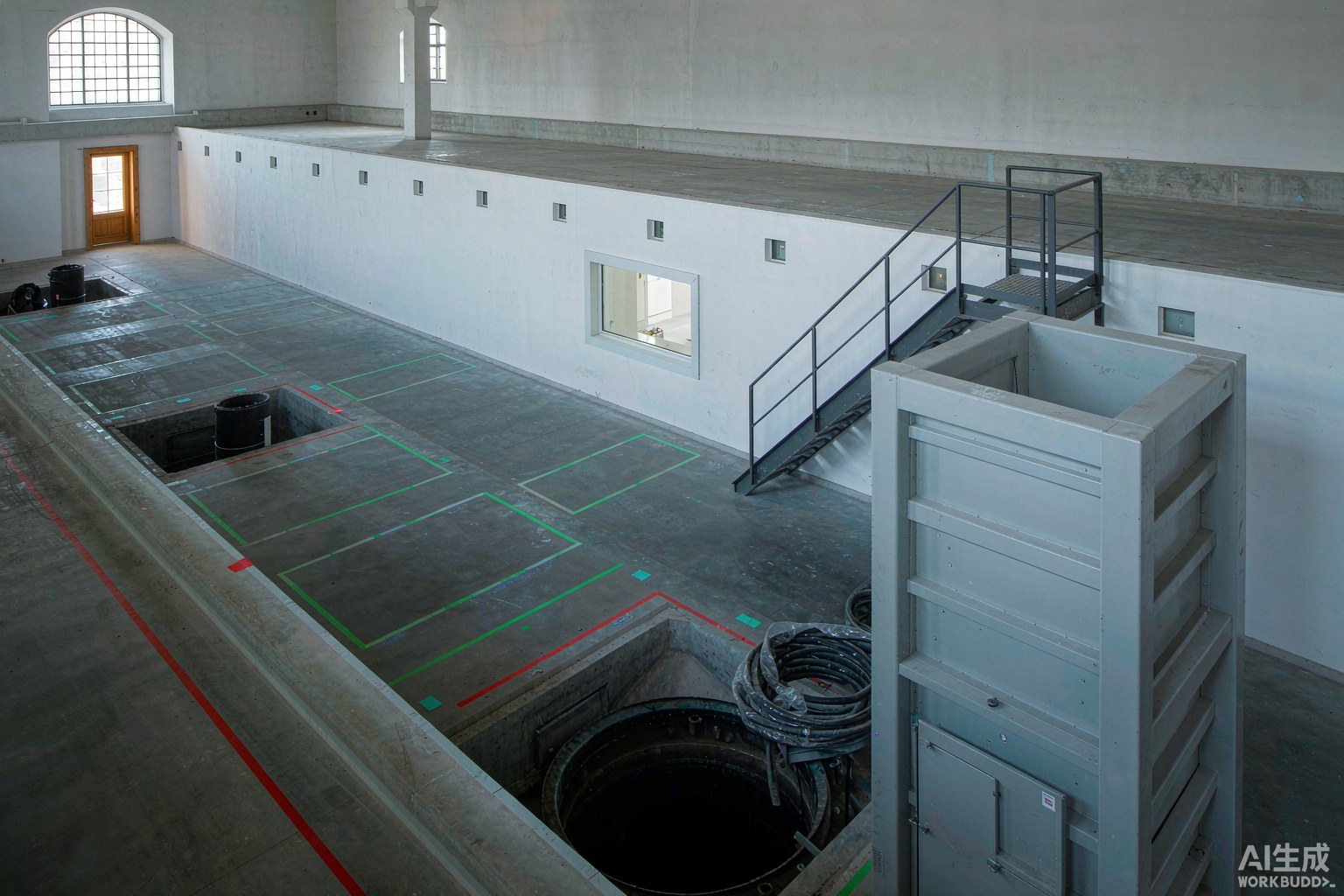
Fig. 1 - Floor markings and labelled connection points make a relocation baseline auditable. Illustrative image, AI-generated, not a product photograph.
Disconnection, labelling and configuration backup
Before any cable is pulled, back up every program, parameter set, drive configuration and HMI project, and store it where a second person can restore it. Verify the backup is readable, not just that a copy command completed; an untested backup is a rumour. Label every disconnected service - power, air, network, safety, field wiring - at both ends and photograph the labels. Label removed fixtures and guides back to their station.
Configuration is more fragile than hardware because it is invisible. A machine can be reconnected correctly yet behave differently if a drive parameter, offset or scaling value was lost. Record controller and drive versions beside the backup and note calibration constants outside the program. A relocation record that cannot prove what was restored cannot support a re-acceptance verdict.
Re-installation, alignment and service reconnection
At the new position work from the baseline, not habit. Re-establish the floor position from recorded markings, level the machine and re-check the alignment references documented before the move. Reconnect services against the labelled list and confirm each at the point of use - correct supply, air quality, network identity - rather than checking a plug fits. Restore configuration from the verified backup and confirm versions.
Alignment deserves its own record as the most common silent change. A stage slightly out of level, a guide re-mounted a fraction differently or a tensioner on a new bracket can all shift placement while the program looks untouched. Note any difference between old and new site - floor, vibration, ambient - because those may explain a result the mechanical checks cannot.
| Record section | Evidence required | Common omission | Who signs |
|---|---|---|---|
| Pre-move baseline | Settings, results, retained part | Results recorded without conditions | Process owner |
| Configuration backup | Verified program and drive files | Untested or unreadable backup | Controls engineer |
| Disconnection record | Labelled services and photos | Labels missing at one end | Maintenance lead |
| Re-installation | Levelling and alignment readings | Alignment not re-measured | Installation engineer |
| Service reconnection | Verified supply at point of use | Plug checked, quality ignored | Facilities representative |
| Re-acceptance | Results compared with baseline | Compared against memory | Quality representative |
| Sign-off | Complete record and open items | Open items left unassigned | Line owner |
Re-acceptance and comparison with the baseline
Re-acceptance repeats the baseline measurements under the same stated conditions on representative parts. Compare new results against the retained sample and recorded values, not a general sense of what the machine used to do. Check placement, count, resistance, dimensions and appearance, and run long enough to include starts, stops and spool changes. If a result moved, use the baseline to ask which condition changed, not retune to hide it.
A process adjusted until it looks acceptable has not been shown to be the same process, and the next audit loses a common reference. Record unresolvable differences as open items with an owner. The limit of re-acceptance is that it confirms a limited one-day run, not long-term capability; that returns only with trend data from continued production.
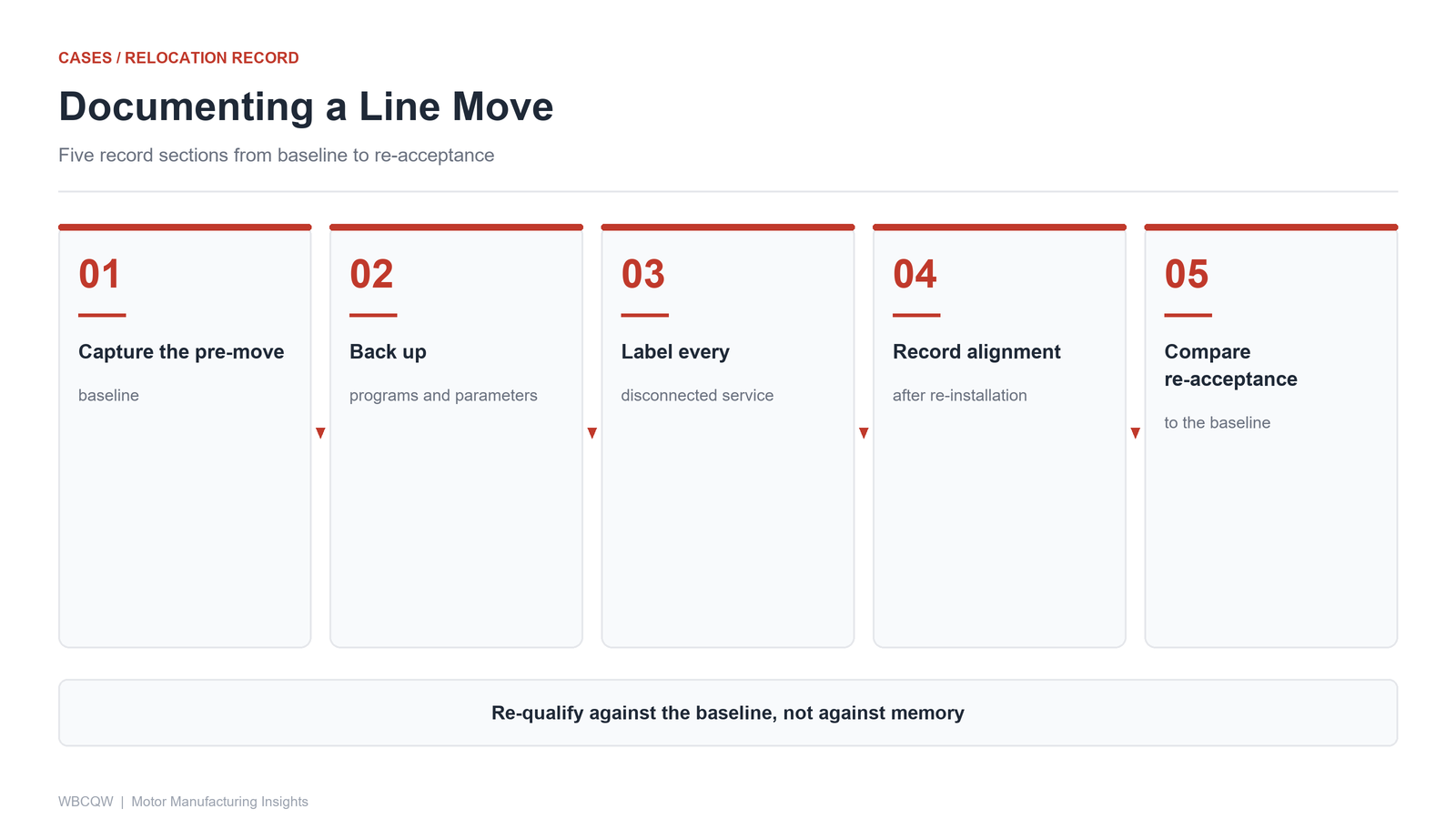
Fig. 2 - Five record sections for a winding line relocation and re-layout. Illustrative diagram, not a product photograph.
A relocation record checklist
A workable checklist follows the move's sequence: baseline, backup, disconnection, re-installation, service reconnection, re-acceptance and sign-off. For each section name the evidence required, the person who signs it and the common omission it is prone to. Keep photographs, backups, readings and retained parts under one relocation identifier, so an auditor reconstructs the whole move from a single file rather than several recollections.
Used well, the checklist produces evidence the line was returned to a known state. Its honest boundary is that documentation cannot prevent a mistake; it can only make one visible and traceable. A relocation record proves a re-qualification happened and against what reference - which turns 'we moved the line' into a defensible engineering statement rather than an assumption.